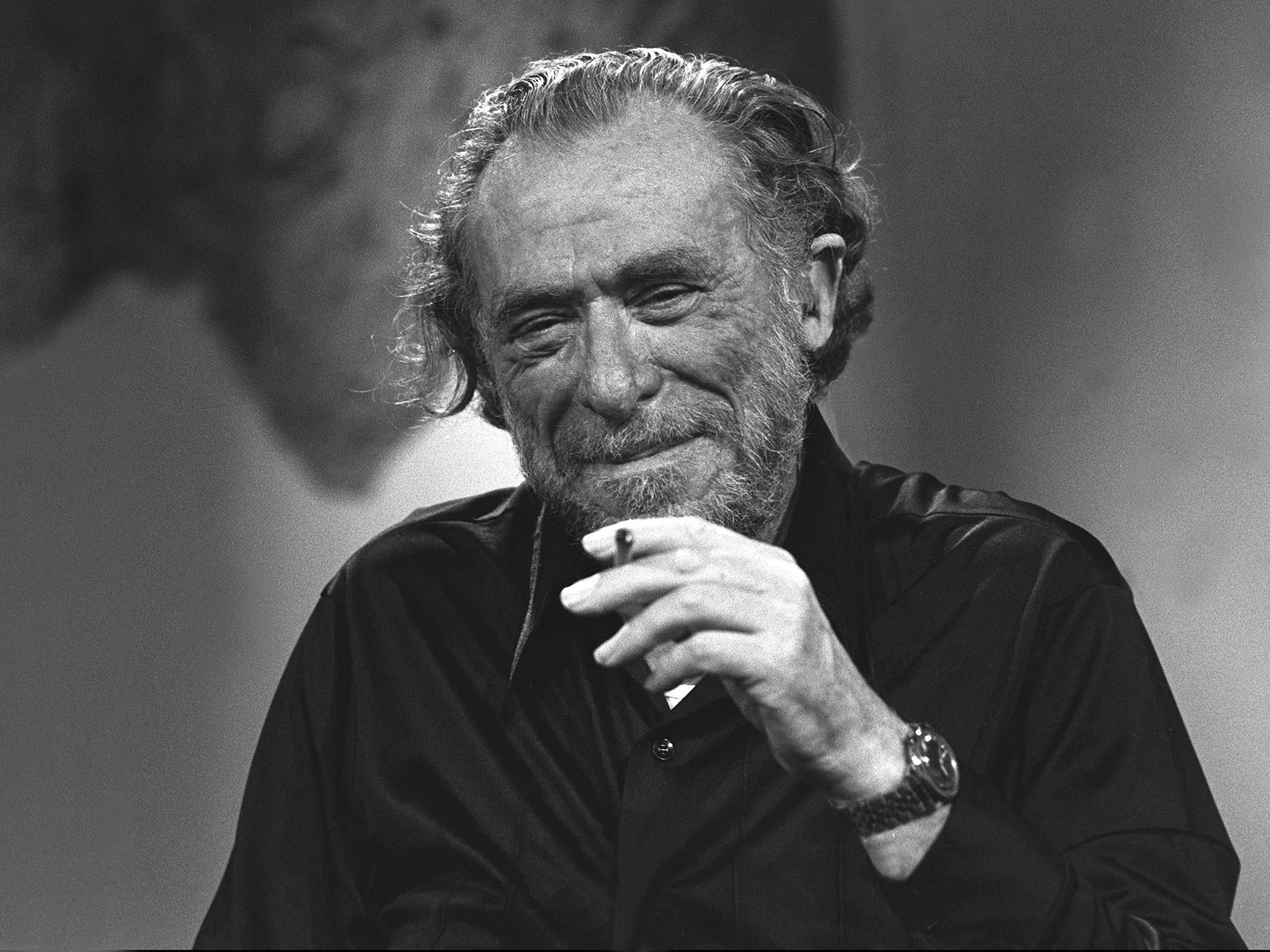
Birth Name
Heinrich Karl Bukowski Jr.
Birth Date
1920 August 16
Birth Location
Andernach, Germany
Height
182 cm
Professions
IMDb ID
Wikipedia Article
# Charles Bukowski
Charles Bukowski, born on August 16, 1920, in Andernach, Germany, was a prolific American writer and poet who gained widespread recognition for his raw and candid depictions of life, love, and the human condition. Standing at a height of 182 cm, Bukowski became a notable figure in the literary world, celebrated for his distinct voice and unapologetic exploration of the darker aspects of human existence. He is best known for his semi-autobiographical novels, short stories, and poetry, which often draw from his own tumultuous life experiences.
Bukowski's works, characterized by their gritty realism and brutally honest narratives, have earned him a cult following and have solidified his place as one of the most influential writers of the 20th century. His writing style, marked by simple language and a focus on everyday experiences, resonates deeply with readers, making him an enduring figure in American literature.
Quick Facts
- Birth Name: Charles Henry Bukowski - Birth Date: August 16, 1920 - Birthplace: Andernach, Germany - Height: 182 cm - Occupations: Poet, novelist, short story writer - Years Active: 1944–1994 - Known As: "The Bard of Los Angeles"
Early Life and Education
Charles Bukowski was born into a working-class family, the son of a German father and a Polish mother. The family immigrated to the United States when Bukowski was just two years old, settling in Los Angeles, California. Growing up in a tumultuous household, Bukowski experienced a difficult childhood marked by his father's domineering and abusive behavior. This upbringing instilled in him a lifelong sense of alienation and disillusionment, themes that would later permeate his writing.
As a child, Bukowski exhibited an early interest in literature and art, often retreating into books as a means of escape from his harsh reality. He found solace in the works of authors such as Mark Twain, Ernest Hemingway, and Fyodor Dostoevsky, whose influence can be felt in his own writing style. Bukowski attended Los Angeles City College, where he began to pursue his passion for writing. However, his academic journey was often interrupted by his struggles with personal issues, including bouts of depression and social anxiety.
Despite these challenges, Bukowski's love for writing flourished during this period, and he began submitting poems and stories to various literary magazines. His early works, heavily influenced by his experiences and observations of life in Los Angeles, laid the foundation for what would become his distinctive literary voice.
Career
Bukowski's literary career began in earnest in the 1940s, although he initially found it difficult to gain recognition. His first published work, a collection of poems titled "Flower, Fist and Bestial Wail," appeared in 1959, but it was not until the 1970s that he achieved significant fame. His breakthrough came with the novel "Post Office," published in 1971, which drew heavily from his own experiences working various menial jobs. The book's candid portrayal of the drudgery of everyday life resonated with readers and established Bukowski as a voice of the downtrodden.
Throughout the 1970s and 1980s, Bukowski continued to produce a remarkable body of work, including notable novels such as "Women," "Ham on Rye," and "Factotum." His writing, often semi-autobiographical, explored themes of love, loneliness, alcoholism, and the struggles of the working class. Bukowski's unique style—characterized by its simplicity, humor, and unflinching honesty—captivated audiences and earned him a loyal following.
In addition to his novels, Bukowski was a prolific poet, publishing numerous collections that further solidified his reputation as a leading figure in contemporary poetry. His poetry collections, such as "Love is a Dog From Hell" and "The Last Night of the Earth Poems," showcase his ability to distill complex emotions and experiences into concise, impactful verses.
As his fame grew, Bukowski expanded his horizons beyond writing. He ventured into screenwriting, contributing to the film adaptation of his novel "Barfly," which starred Mickey Rourke and Faye Dunaway. The film, released in 1987, was well-received and further cemented Bukowski's status as a cultural icon.
In his later years, Bukowski continued to write and publish, producing a steady stream of work until his death in 1994. His final collection, "The Last Night of the Earth Poems," was published shortly before his passing, serving as a poignant reflection of his life's journey and artistic evolution.
Personal Life
Bukowski's personal life was as tumultuous and colorful as his writing. He was known for his numerous romantic relationships, many of which inspired his poetry and prose. His interactions with women were often complex, marked by both affection and conflict. Bukowski's love life was characterized by a series of passionate affairs, often documented in his work, where he explored themes of desire, heartbreak, and the intricacies of human relationships.
Despite his reputation as a hard-drinking, womanizing writer, those close to Bukowski often described him as a deeply sensitive man with a profound understanding of the human experience. He had a unique ability to connect with people from all walks of life, which contributed to the authenticity and relatability of his writing. Bukowski was known for his love of dogs, often referring to his canine companions in his work and public appearances.
In terms of lifestyle, Bukowski lived a bohemian existence, often residing in the gritty neighborhoods of Los Angeles. He was an avid drinker, and his fondness for alcohol often found its way into his writing. Bukowski's public image as the quintessential "underdog" resonated with many, and he embraced his status as a literary rebel, challenging conventional norms and expectations.
Appearance
Physically, Bukowski was a striking figure, embodying the rugged, rough-hewn persona that he often portrayed in his writing. Standing at 182, he had a weathered appearance that reflected his hard-lived life. Bukowski's hairstyle varied over the years, from a disheveled look in his youth to a more refined style in his later years, though he always maintained a distinctly unpolished aesthetic.
He was known for his casual attire, often donning simple shirts and jeans, which complemented his down-to-earth personality. Bukowski's appearance was further defined by his expressive face, which conveyed a range of emotions, from joy to despair, and mirrored the intensity of his writing. While he did not have prominent tattoos, his life experiences and the stories he told through his art left an indelible mark on his identity.
Filmography Overview
While primarily known as a writer, Bukowski's influence extended into film, with several adaptations of his work making their way to the screen. His films often explored the same themes present in his writing: the struggles of the human condition, the pursuit of love, and the quest for meaning in a chaotic world. Bukowski's raw and unfiltered perspective on life translated well to the visual medium, allowing audiences to engage with his stories in new ways.
His screenwriting contributions, particularly to "Barfly," showcased his unique voice and storytelling abilities, bridging the gap between literature and cinema. The film's success helped introduce Bukowski's work to a wider audience, further solidifying his legacy as a significant figure in American culture.
Awards and Achievements
Throughout his career, Bukowski received numerous accolades and honors, recognizing his contributions to literature and poetry. While he was often overlooked by mainstream literary institutions during his lifetime, his work has since garnered critical acclaim and respect. Bukowski's legacy includes not only a vast body of literature but also a lasting impact on the literary landscape, influencing countless writers and poets who followed in his footsteps.
His work was celebrated for its unflinching honesty and ability to capture the essence of the human experience. Posthumously, Bukowski's writings continue to resonate with readers, and his status as a countercultural icon remains intact, solidifying his place in the pantheon of great American writers.
Legacy
Charles Bukowski's influence on cinema and culture is profound, as he challenged societal norms and offered a voice to those often marginalized in literature. His works, rich in their exploration of the human condition, continue to inspire new generations of readers and writers. Bukowski's ability to articulate the struggles of everyday life with humor and poignancy has left an indelible mark on literature, making him a timeless figure whose relevance endures.
What makes Bukowski long-lasting and impactful is not only his unique writing style but also his unwavering commitment to authenticity and truth. He dared to delve into the darker aspects of life, illuminating experiences that many often shy away from. His legacy is one of resilience, creativity, and the power of storytelling, reminding us that even in the midst of chaos, there is beauty to be found in the human experience.