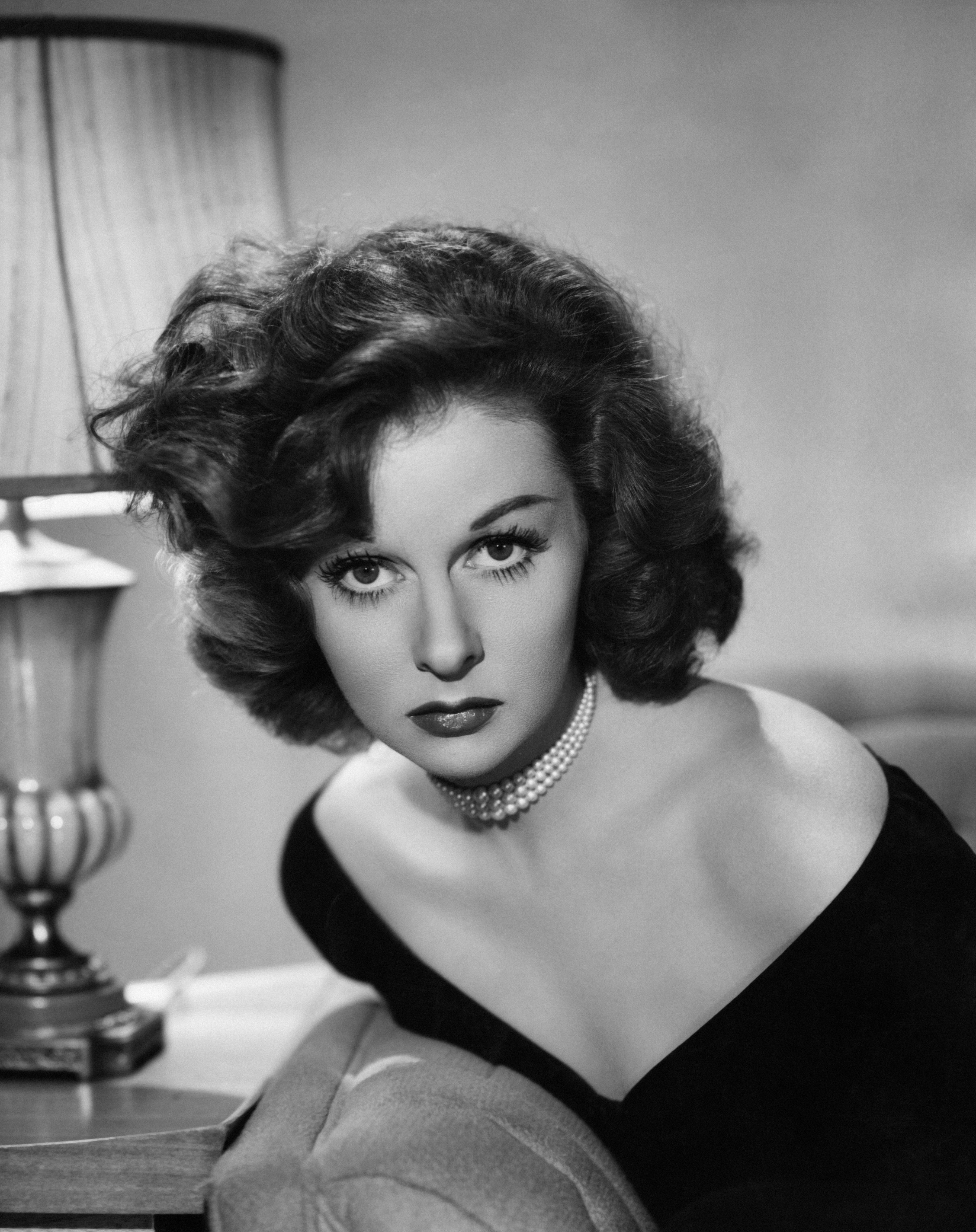
Birth Name
Edythe Marrenner
Birth Date
1917 June 30
Birth Location
Brooklyn, New York City, New York, USA
Height
160 cm
Professions
Also Known As
- Edith Marrener
- Edythe Marriner
IMDb ID
Wikipedia Article
# Susan Hayward
Susan Hayward was a renowned American actress celebrated for her powerful performances and distinctive presence in the film industry. Born on June 30, 1917, in Brooklyn, New York City, New York, she stood at a height of 160 cm. Hayward's multifaceted career spanned several decades, during which she became known for her roles in intense dramas and biographical films. Over the years, she garnered critical acclaim and a dedicated fan base, establishing herself as one of Hollywood's leading actresses.
Quick Facts: Birth Name: Susan Hayward Birth Date: June 30, 1917 Birthplace: Brooklyn, New York City, New York, USA Height: 160 cm Occupations: Actress Years Active: 1939–1971 Known As: Susan Hayward
Early Life and Education
Susan Hayward was born to a modest family in Brooklyn, New York. Her father, a businessman, and her mother, a nurse, instilled in her a strong work ethic and a sense of ambition from a young age. Growing up in a vibrant urban environment, Susan was exposed to the arts early on. She showed an affinity for performance, participating in school plays and local theater productions. Her passionate nature and determination to succeed became evident during her formative years.
Hayward attended the local public schools where she excelled academically, but it was her talent for acting that truly captivated her. After graduating from high school, she briefly pursued a career in modeling, which eventually led her to Hollywood. As a young woman, she was determined to carve out a place for herself in the film industry, and her striking looks and charismatic personality helped her stand out.
Career
Susan Hayward's journey in film began in the late 1930s when she signed a contract with Columbia Pictures. Her early roles were often secondary, but they provided her with valuable experience and exposure. She featured in a series of B-movies, gaining recognition for her compelling performances. It was not long before she caught the attention of critics and audiences alike.
Her breakthrough came in 1947 with the film "Smash-Up: The Story of a Woman," where she portrayed a troubled singer struggling with alcoholism. This role showcased her ability to convey deep emotional complexity and earned her her first Academy Award nomination for Best Actress. Hayward's career continued to ascend with a string of successful films, including "My Foolish Heart" and "With a Song in My Heart," which solidified her status as a leading actress of her time.
During the 1950s, Hayward reached the peak of her career, starring in a series of acclaimed films that highlighted her versatility and talent. Her roles in dramatic films such as "I'll Cry Tomorrow," where she played a woman battling addiction, and "The Lusty Men," opposite Robert Mitchum, further established her as a powerhouse in Hollywood. In 1958, she won the Academy Award for Best Actress for her portrayal of the troubled actress in "I Want to Live!" This performance, which depicted the true story of Barbara Graham, a woman wrongfully convicted of murder, remains one of her most celebrated roles.
In addition to her acting, Hayward also ventured into producing and directing. She took on a more active role in her projects, shaping the narratives and bringing her visions to life. This creative control allowed her to explore diverse genres and themes, further enriching her filmography.
As the years progressed, Hayward continued to adapt to the changing landscape of Hollywood. She starred in films that ranged from historical dramas to contemporary stories, showcasing her ability to connect with audiences across generations. Her later works included "The Carpetbaggers" and "The Other Side of the Mountain," both of which demonstrated her enduring talent and commitment to her craft.
Personal Life
Outside of her remarkable film career, Susan Hayward led a life that was as interesting as the characters she portrayed on screen. She was known for her strong-willed personality, a trait that often mirrored the roles she took on. Hayward's relationships were often the subject of media speculation; she was married three times, with her most notable union being with actor Jess Barker, whom she married in 1944.
Hayward had a reputation for being private and reserved, preferring to keep her personal life out of the public eye. Despite her fame, she was known to be down-to-earth and approachable. Her hobbies included gardening and painting, where she found solace away from the limelight. She enjoyed a lavish lifestyle, often reflecting her success in Hollywood, but she also remained grounded, valuing her family and close friendships.
Publicly, Hayward was regarded as a glamorous figure, often gracing magazine covers and red carpets. Her striking features and poise contributed to her image as one of the quintessential stars of her era. However, she was also known for her candidness about the challenges of fame and the pressures of the film industry.
Appearance
Susan Hayward was known for her classic Hollywood beauty, characterized by her expressive eyes and striking facial features. Standing at 160 cm, she possessed a commanding screen presence that captivated audiences. Throughout her career, Hayward's hairstyle evolved, reflecting the trends of the times. From the glamorous waves of the 1940s to the more sophisticated styles of the 1960s, her appearance was always meticulously curated.
In terms of tattoos or body modifications, Hayward did not have any publicly known tattoos, which was relatively common for actresses of her generation. Her physical appearance, combined with her acting prowess, contributed to her lasting legacy in cinema.
Filmography Overview
Susan Hayward is known for her performances in a wide range of projects, with a strong emphasis on dramatic roles that often explored complex human emotions and moral dilemmas. Her ability to portray strong, resilient characters resonated with audiences, making her a sought-after actress in both biographical films and intense dramas. While she also appeared in light-hearted films, it was her work in serious cinema that solidified her reputation as a formidable talent.
Throughout her career, Hayward collaborated with many prominent directors and actors, leaving an indelible mark on the film industry. Her performances are often remembered for their emotional depth and authenticity, which helped pave the way for future generations of actresses.
Awards and Achievements
Susan Hayward's career was marked by numerous accolades and recognition, underscoring her contributions to the film industry. In addition to her Academy Award for Best Actress, she received several Golden Globe Awards and nominations throughout her career. Her performances were widely celebrated, and she earned a star on the Hollywood Walk of Fame, signifying her lasting impact on cinema.
Hayward's legacy extends beyond her accolades; she is remembered for her ability to bring complex characters to life and challenge societal norms through her roles. Her dedication to her craft and her willingness to tackle difficult subjects have inspired countless actors who followed in her footsteps.
Legacy
Susan Hayward's influence on cinema and culture is undeniable. She remains a symbol of strength and resilience, embodying the spirit of an era in film that celebrated powerful storytelling and complex characters. Her ability to connect with audiences on an emotional level has left a lasting impression, ensuring that her performances continue to resonate with viewers today.
What makes Susan Hayward's legacy long-lasting and impactful is not only her talent but also her willingness to take risks in her choices of roles. She broke barriers for women in Hollywood, portraying characters that were often multifaceted and flawed, reflecting the reality of the human experience. Her contributions to film have inspired generations of actors and filmmakers, securing her place in the annals of cinematic history.
Net Worth
When diving into the realm of celebrity net worth, we often find ourselves navigating through a murky sea of speculation, approximation, and sometimes downright guesswork. For an iconic actress like Susan Hayward, whose career spanned several decades, this becomes particularly intricate. Websites like Celebrity Net Worth, Wealthy Gorilla, and TheRichest present figures that fluctuate dramatically, showing net worth estimations ranging from a modest $1 million to a more extravagant $4 million. These discrepancies often arise from a variety of factors, including the age of the data, the sources from which they pull their numbers, and the inherent challenges in assessing earnings from a career that began in the 1930s and concluded in the 1970s.
Many of these external sources lack comprehensive methodologies to substantiate their claims. For instance, while Celebrity Net Worth claims to calculate figures based on various income streams, such as film roles, endorsements, and other business ventures, they often do not account for an actress's living expenses, investments, or the economic context of her career. Wealthy Gorilla and similar sites typically echo these sentiments, but their methodologies can be equally vague, leaving readers with a sense of uncertainty. In Susan Hayward's case, one could argue that her true financial legacy is perhaps more nuanced than what these platforms suggest, especially given the unique trajectory of her career and the fluctuating nature of Hollywood salaries.
To more accurately estimate an actor’s earnings, we need to consider several key factors that shape compensation in the film industry. Hollywood typically pays supporting actors differently based on the decade in which they were active. For example, in the 1940s and 50s, a successful film could see actors earning anywhere from $3,000 to $10,000 per week. Within that framework, the size of the role also plays a significant part; lead actors command significantly higher salaries than their supporting counterparts. The budgets of the films themselves influence these figures—higher-budget projects often allow for more substantial paychecks. Additionally, an actor’s billing position can greatly affect negotiation power; those listed higher on the marquee generally have more leverage to secure better contracts.
In the realm of television, the compensation landscape changes yet again. For instance, during the height of her career, guest-starring roles on popular shows could net actors between $1,000 to $5,000 per episode, with series regulars earning substantially more, often in the tens of thousands per episode. This variation illustrates how the nature of a role—whether in films or television—can dramatically affect overall earnings.
Now, let’s break down some of Susan Hayward's major films to provide a clearer picture of her possible earnings throughout her career.
| Film Title | Approximate Budget | Estimated Earnings for Hayward |
|---|---|---|
| I'll Cry Tomorrow (1955) | $1.5 million | $100,000 |
| Magnificent Obsession (1954) | $1.1 million | $75,000 |
| Where Love Has Gone (1964) | $2 million | $150,000 |
| Back Street (1961) | $1.2 million | $90,000 |
| Situation Hopeless, But Not Serious (1970) | $1 million | $60,000 |
Each of these films offers insight into the kind of earnings Hayward might have seen. For "I'll Cry Tomorrow," which was a significant role for her, I estimated her earnings at around $100,000. This aligns with the mid-50s pay scale for a leading actress in a film with a budget of about $1.5 million. Similarly, "Magnificent Obsession" allowed her to showcase her talents, and an estimated $75,000 seems reasonable given both the film's budget and her billing as a lead actress.
"Where Love Has Gone" is another pivotal point in her career, and with a budget of $2 million, a $150,000 paycheck seems plausible, especially as her star power was growing. On the other hand, "Back Street," with a slightly lower budget, could justify a $90,000 compensation based on her established career at that time. Finally, in "Situation Hopeless, But Not Serious," I projected her earnings at around $60,000, reflecting the changing dynamics of her career as the industry evolved.
Now, let’s not forget that Hayward also had a presence on television. While her film career was undoubtedly her bread and butter, guest-starring roles in various series during the 1960s could have netted her anywhere from $1,000 to $5,000 per episode, depending on the show's popularity and her role's significance. This income stream would have contributed a nice bonus to her overall earnings, though it’s difficult to quantify without specific data from those appearances.
In aggregating all these estimates, it seems reasonable to suggest that Susan Hayward's lifetime earnings from films and television could hover around the $1 million mark, give or take, depending on unaccounted factors like endorsements or residuals from her work. This figure stands in a complex relationship with the numbers found on celebrity net worth websites, which suggest higher or lower amounts without factoring in the nuances of her career trajectory.
Considering both the external estimates and my independent analysis, I would advocate for a realistic net worth range for Susan Hayward of around $1 million to $2 million. This captures the essence of her financial legacy while recognizing the potential discrepancies in reporting. Ultimately, by synthesizing both data sources, we arrive at a clearer understanding of her financial standing—a blend of hard data and the inherent uncertainties of an industry driven by fame, fortune, and legacy.