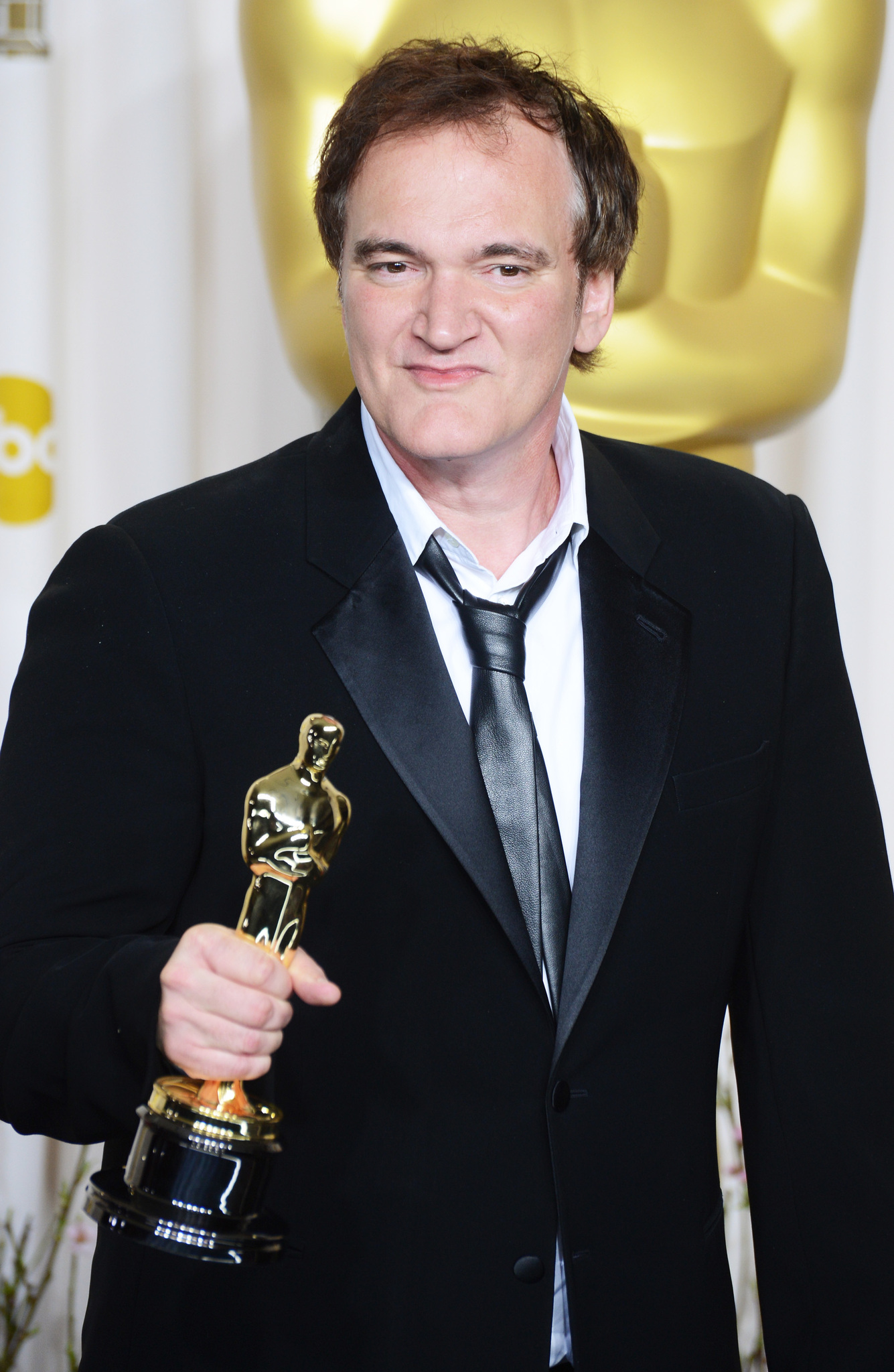
Birth Name
Quentin Jerome Tarantino
Birth Date
1963 March 27
Birth Location
Knoxville, Tennessee, USA
Height
185 cm
Professions
Also Known As
- Q
- Quentin Tarrantino
IMDb ID
Wikipedia Article
# Quentin Tarantino
Quentin Tarantino is an acclaimed American filmmaker, screenwriter, producer, and actor, widely regarded for his innovative and distinctive approach to filmmaking. Born on March 27, 1963, in Knoxville, Tennessee, Tarantino has established himself as one of the most influential directors in modern cinema. Standing at a height of 185 cm, he is known for his unique storytelling style, which often includes nonlinear narratives, sharp dialogue, and a penchant for blending genres. His notable contributions to film have earned him numerous accolades, including multiple Academy Awards and a cult following among movie enthusiasts.
Quick Facts: Birth Name: Quentin Jerome Tarantino Birth Date: March 27, 1963 Birthplace: Knoxville, Tennessee, USA Height: 185 cm Occupations: Filmmaker, Screenwriter, Producer, Actor Years Active: 1987–present Known As: Director and screenwriter of iconic films
Early Life and Education
Quentin Tarantino was raised in a working-class family in Los Angeles, California, after his mother relocated there when he was four years old following her divorce. He spent his formative years immersed in the vibrant culture of the late 1970s and early 1980s, which heavily influenced his creative development. As a child, Tarantino exhibited a passion for cinema that set the stage for his future career. He was largely influenced by the films he watched at local theaters, ranging from spaghetti westerns to blaxploitation films, which contributed to his eclectic taste in movies.
During his adolescence, Tarantino's passion for film blossomed. He often frequented video rental stores and spent hours discussing films with fellow cinephiles. He developed a keen interest in screenwriting and storytelling, leading him to write his first screenplay at the age of 16. Tarantino's personality was characterized by a blend of confidence and rebellion, traits that would later manifest in his bold filmmaking style. After high school, he worked at a video rental store, where he immersed himself in film discussions and further honed his craft.
Career
Tarantino's career began with modest beginnings in the late 1980s. His first significant break came when he wrote the screenplay for "True Romance" (1993), directed by Tony Scott. However, it was "Reservoir Dogs" (1992), his directorial debut, that catapulted him into the limelight. The film, which showcased a heist gone wrong, was celebrated for its sharp dialogue, non-linear narrative, and a strong ensemble cast. The success of "Reservoir Dogs" established Tarantino as a fresh voice in independent cinema.
Tarantino's breakthrough came with "Pulp Fiction" (1994), a film that would become a cultural touchstone. The film interwove multiple storylines featuring hitmen, mobsters, and a pair of armed robbers, all delivered with his signature wit and style. "Pulp Fiction" received the Palme d'Or at the Cannes Film Festival and won the Academy Award for Best Original Screenplay, solidifying Tarantino's status as a leading filmmaker.
Throughout the late 1990s and into the 2000s, Tarantino continued to release films that showcased his unique narrative techniques and love for genre cinema. "Jackie Brown" (1997) paid homage to blaxploitation films, while "Kill Bill: Vol. 1" (2003) and "Kill Bill: Vol. 2" (2004) were ambitious revenge epics that drew inspiration from martial arts films. His work during this period was marked by a blending of genres, stylistic flair, and memorable characters.
The peak of Tarantino's career can be seen in his later works, including "Inglourious Basterds" (2009) and "Django Unchained" (2012), both of which received critical acclaim and commercial success. "Inglourious Basterds" reimagined World War II, featuring a diverse cast and a memorable performance by Christoph Waltz, who won an Academy Award for his role. "Django Unchained" tackled themes of slavery and revenge, further illustrating Tarantino's ability to blend historical narratives with his signature style.
In addition to his directorial work, Tarantino has also ventured into producing and acting. He produced films such as "Sin City" (2005) and "The Man with the Iron Fists" (2012), showcasing his ability to identify and support emerging talent. In recent years, he has acted in projects like "The Hateful Eight" (2015), where he made a cameo appearance, reaffirming his multifaceted contributions to the industry.
Personal Life
Tarantino's personal life has often been a subject of interest, with many speculating about his relationships and lifestyle. He has been known to keep a relatively private life, but his passion for film is evident in both his personal and professional pursuits. Tarantino has been married to Israeli singer Daniella Pick since 2018, and the couple welcomed their first child in 2020. His relationships often reflect his passion for creativity, as he has collaborated with numerous actors and filmmakers throughout his career.
Despite his success, Tarantino maintains a grounded persona, often emphasizing his love for cinema above all else. He frequently engages in discussions about film history and the craft of filmmaking, showcasing his commitment to the art form. Outside of filmmaking, Tarantino has expressed an interest in literature and often cites literary influences in his work. He is also known for his eclectic taste in music, which plays a significant role in his films, further illustrating his multifaceted creative identity.
Appearance
Physically, Quentin Tarantino is known for his tall stature, standing at 185. His appearance has evolved over the years, often characterized by his distinctive hairstyles, ranging from curly locks to a more subdued, slicked-back look. He has occasionally sported facial hair, adding to his unique appearance. While not heavily tattooed, he has a few personal tattoos that reflect his love for cinema and its culture.
Tarantino's style is often casual yet distinctive, favoring comfortable clothing that reflects his laid-back personality. His public image is that of a passionate filmmaker who is not afraid to speak his mind, often engaging in candid discussions about his work and the industry. This directness has endeared him to fans and critics alike, who appreciate his authenticity.
Filmography Overview
Quentin Tarantino's filmography is characterized by a wide range of projects, each reflecting his love for storytelling and genre cinema. He is particularly known for his ability to blend different genres, from action and drama to comedy and thriller, often with a unique twist. His films frequently explore themes of vengeance, morality, and the human condition, delivered through sharp dialogue and memorable characters.
Tarantino's works often feature ensemble casts, with many actors returning to collaborate with him on multiple projects. His films are marked by their nonlinear storytelling, memorable soundtracks, and a vivid visual style that has influenced a new generation of filmmakers. His ability to pay homage to various film genres while crafting original narratives has cemented his legacy as a master storyteller.
Awards and Achievements
Throughout his career, Tarantino has received numerous awards and nominations, reflecting his impact on the film industry. He has won two Academy Awards for Best Original Screenplay for "Pulp Fiction" and "Django Unchained," among many other accolades. His films have garnered critical acclaim, numerous box office successes, and a dedicated fan base, establishing him as a prominent figure in contemporary cinema.
In addition to his Oscar wins, Tarantino has received accolades from various film festivals and critics' groups, further underscoring his contributions to the art of filmmaking. His work has been recognized for pushing boundaries, redefining genres, and influencing filmmakers around the world.
Legacy
Quentin Tarantino's influence on cinema and culture is profound and lasting. He has redefined the boundaries of independent filmmaking, inspiring countless filmmakers to explore creative storytelling and genre blending. His films have sparked conversations about violence in cinema, narrative structure, and the role of genre in storytelling, making him a pivotal figure in discussions about modern film.
What sets Tarantino apart is his unwavering commitment to his artistic vision and his ability to create films that resonate with audiences on multiple levels. His work continues to inspire, entertain, and provoke thought, ensuring his place in the pantheon of great filmmakers. Tarantino's legacy is not merely defined by his filmography but also by his impact on the cultural landscape, making him a timeless figure in the world of cinema.
Net Worth
Estimating the net worth of a multifaceted talent like Quentin Tarantino presents a fascinating challenge, particularly when we consider the various methods available. External sources like Celebrity Net Worth, WealthyGorilla, TheRichest, and PeopleAi provide a starting point with their estimations, but they often come with discrepancies that can grate on your belief system. For example, Celebrity Net Worth estimates Tarantino's worth at around $120 million, while TheRichest suggests it could be closer to $150 million. WealthyGorilla, on the other hand, positions him at approximately $100 million. The variance among these figures stems from a mix of factors: the methodologies used, the time of publication, and the sources of their information. While some rely heavily on public financial disclosures or industry averages, others may factor in more speculative elements, like future earnings potential or assets not accurately quantified. This lack of standardization means we must tread carefully when interpreting these numbers.
Now, let’s break down the logic behind estimating Tarantino’s earnings beyond these public estimates. Hollywood has long operated on the principle of supply and demand, which directly affects how much actors get paid. Supporting actors in the 1990s typically earned anywhere from $50,000 to $1 million per film, depending on their billing position and the film's budget. For a director who also acts in his films, like Tarantino occasionally does, his earnings could vary widely based on the size of his role. It’s not just about the talent; it’s about the negotiation power you wield when it comes time to sign that contract. The bigger the film budget, the more leverage an actor has to negotiate higher pay, as studios are eager to fill roles with high-profile names to guarantee box office success.
In addition, the TV landscape is another realm where compensation can be calculated. Actors in popular series can command substantial pay per episode, with top-tier talent making upwards of $1 million per episode in some cases. Tarantino’s involvement in television, particularly with shows like "CSI: Crime Scene Investigation," would add another layer to his overall earnings.
To summarize Tarantino's major films, their approximate budgets, and my estimated earnings per film, I have compiled the following table:
```html
| Film | Approximate Budget | Estimated Earnings |
|---|---|---|
| Pulp Fiction (1994) | $8.5 million | $1 million |
| Kill Bill: Vol. 1 (2003) | $30 million | $2 million |
| Inglourious Basterds (2009) | $70 million | $3 million |
| Django Unchained (2012) | $100 million | $5 million |
| The Hateful Eight (2015) | $44 million | $3 million |
| Once Upon a Time in Hollywood (2019) | $90 million | $10 million |
```
Diving deeper into each of these films reveals the nuances behind my estimated earnings. "Pulp Fiction" was a groundbreaking film that changed the landscape of independent cinema. Tarantino, riding on a wave of critical acclaim, likely secured a solid deal, earning around $1 million for his work. Fast forward to "Kill Bill: Vol. 1," where the higher budget of $30 million would have bolstered his negotiating power, resulting in an estimated $2 million payout.
With "Inglourious Basterds," which had a hefty budget of $70 million, Tarantino's status as a director was solidified, and thus he could command upwards of $3 million. The film's success at the box office and awards season—let's face it, Academy Awards can translate to millions in residuals—likely played a huge role in this valuation.
"Django Unchained" raised the stakes even further, with a $100 million budget allowing Tarantino to negotiate a cool $5 million for his efforts. The film's commercial success and critical acclaim further positioned him as a heavyweight in the industry.
"The Hateful Eight" had a lower budget of $44 million, but Tarantino's established reputation meant he still earned about $3 million. Finally, "Once Upon a Time in Hollywood" marked a notable high point, both in terms of budget and earnings, as he could leverage his star power and reputation to secure around $10 million for this film.
If we also consider television work, it’s worth noting that Tarantino directed a couple of episodes of "CSI: Crime Scene Investigation." While he may not have earned the same kind of money as he does with his films, directors of his caliber can still command hefty paychecks; estimates range from $100,000 to $500,000 per episode, depending on the show's popularity and the director's profile.
So, if we sum it all up, Tarantino's estimated lifetime earnings from these films alone come to about $24 million. When you factor in additional income from television, royalties, and potential future earnings from his extensive catalog of work, a more conservative estimate of his net worth could hover around $120 million to $150 million, which aligns quite well with the figures from external sources.
Balancing both the external data and my own calculations, I would present a realistic net-worth range for Quentin Tarantino of about $120 to $150 million. This figure encapsulates not just his earnings from films and television but also his potential for future projects, licensing deals, and the evergreen nature of his work in the film industry. In the end, whether you lean toward the lower or upper end of that range, one thing's for sure: Tarantino's financial success mirrors his creative impact on cinema, standing as a testament to his unique vision and talent.