Birth Name
Jayne Seymour Fonda
Birth Date
1937 December 21
Birth Location
Yorkville, Manhattan, New York City, New York, USA
Height
173 cm
Professions
IMDb ID
Wikipedia Article
# Jane Fonda
Jane Fonda is an iconic American actress, producer, and political activist widely recognized for her profound contributions to the film industry and her unwavering commitment to social and political causes. Born on December 21, 1937, in Yorkville, Manhattan, New York City, New York, she stands at a height of 173 cm. Over the decades, Fonda has become a prominent figure in Hollywood, known not only for her captivating performances but also for her outspoken advocacy on issues such as feminism, environmentalism, and anti-war movements. Her notable career has spanned over six decades, earning her numerous accolades and cementing her legacy as one of the most influential actresses of her time.
Quick Facts: Birth Name: Jane Seymour Fonda Birth Date: December 21, 1937 Birthplace: Yorkville, Manhattan, New York City, New York, USA Height: 173 cm Occupations: Actress, producer, political activist Years Active: 1960–present Known As: Jane Fonda
Early Life and Education
Jane Fonda was born into a family deeply embedded in the arts and entertainment industry. Her father, Henry Fonda, was a celebrated actor, while her mother, Frances Ford Seymour, was a socialite. This unique upbringing exposed her to the world of performance from an early age, fostering an interest in acting and the arts. Fonda's childhood was not without its challenges; her mother struggled with mental health issues, which affected the family dynamic and left a lasting imprint on Jane's personality.
Growing up in Manhattan, she attended the prestigious Brearley School, where she excelled academically and developed a passion for literature and drama. Fonda later pursued higher education at Vassar College, where she majored in political science. However, her love for acting eventually led her to transfer to the Actors Studio in New York City, where she honed her craft alongside aspiring actors and seasoned professionals. This blend of education and personal experience shaped Fonda's worldview, instilling in her a strong sense of social justice and the belief that art could be a powerful tool for change.
Career
Jane Fonda's career began in the early 1960s when she made her film debut in "Tall Story" (1960). Although her initial roles were relatively small, her talent quickly garnered attention, and she soon found herself cast in more significant projects. Fonda's breakthrough came with the film "Barbarella" (1968), where she played the titular role, showcasing her striking beauty and charisma. This film not only established her as a leading actress but also allowed her to explore the themes of sexuality and empowerment, which would become central to her later work.
Throughout the 1970s, Fonda reached the peak of her career, earning critical acclaim for her performances in films such as "Klute" (1971) and "Coming Home" (1978), both of which earned her Academy Awards for Best Actress. Her ability to portray complex characters with depth and nuance set her apart from her contemporaries. Fonda's commitment to her roles was evident in her transformative performances, often immersing herself fully in the characters she embodied.
In addition to her acting career, Fonda ventured into producing and directing, further showcasing her multifaceted talents. She produced several films, including "Nine to Five" (1980), which addressed issues of gender inequality in the workplace and became a cultural touchstone. Fonda's contributions to cinema extended beyond acting; her work as a producer and director demonstrated her commitment to telling stories that resonated with audiences and addressed social issues.
In recent years, Fonda has continued to evolve as an actress, taking on roles in projects such as the acclaimed Netflix series "Grace and Frankie," which premiered in 2015. This show, which explores the complexities of aging and friendship, has been praised for its humor and heartfelt storytelling. Fonda's performance in this series has introduced her to a new generation of viewers and reaffirmed her status as a relevant and powerful figure in the entertainment industry.
Personal Life
Jane Fonda's personal life has often been as public as her professional one. Throughout her career, she has been involved in several high-profile relationships, including marriages to director Roger Vadim, activist Tom Hayden, and media mogul Ted Turner. Fonda's relationship with Hayden, in particular, was marked by their shared commitment to social activism, which included protests against the Vietnam War.
Fonda has often spoken about the challenges she faced in balancing her personal life with her career. Despite the pressures of fame, she has maintained a close relationship with her family, including her two children, Vanessa and Troy. Her commitment to her family has played a significant role in shaping her identity outside of her public persona.
In addition to her acting career, Fonda is known for her active lifestyle and commitment to fitness. She has authored several books on health and wellness, sharing her insights on maintaining a healthy body and mind. Fonda's public image has evolved over the years, transitioning from a glamorous Hollywood star to a respected advocate for various causes. Her unapologetic stance on issues such as climate change and women's rights has made her a powerful voice in contemporary social movements.
Appearance
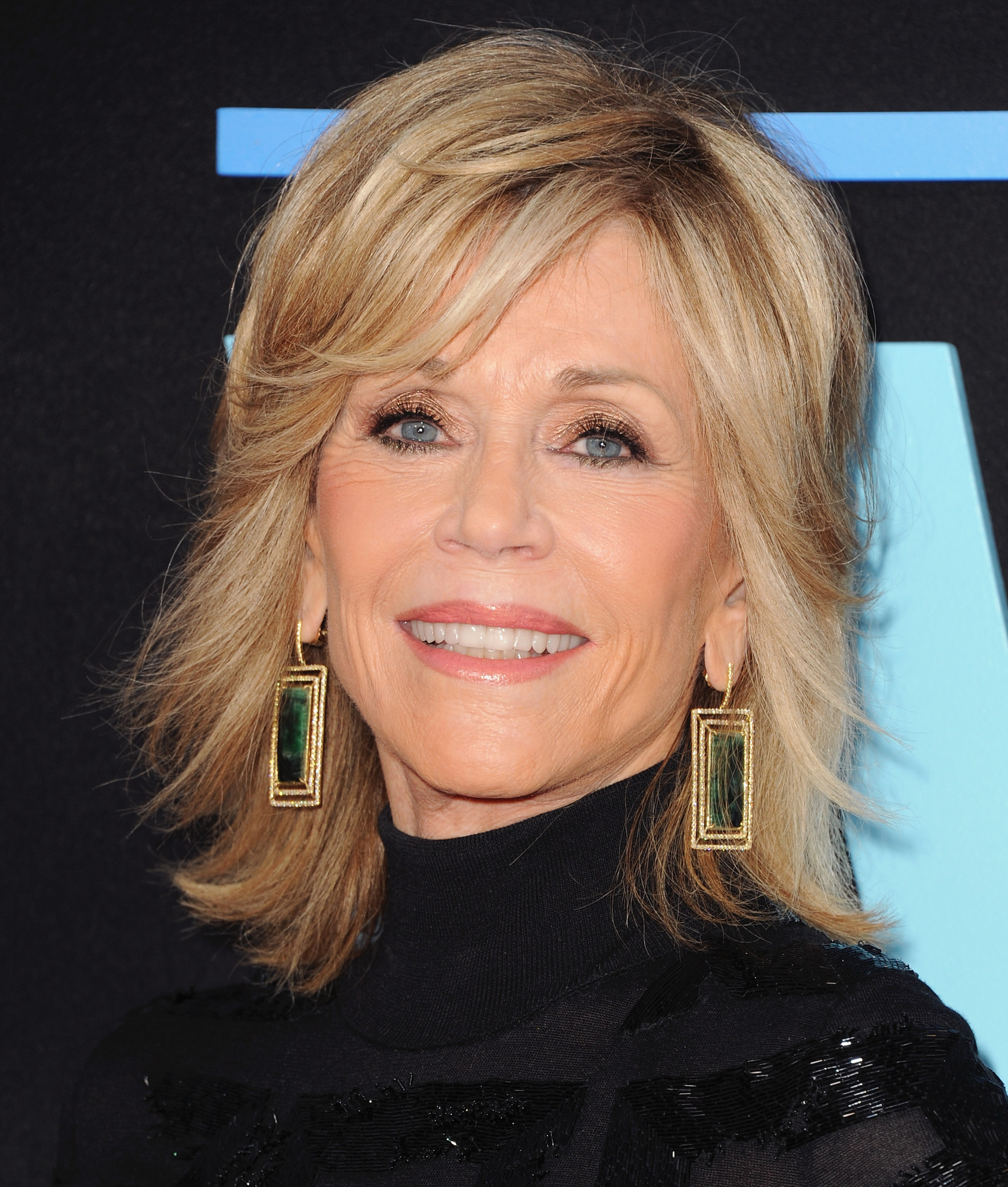
Jane Fonda is often recognized for her striking physical appearance and timeless beauty. Standing at 173 cm, she has a commanding presence both on and off the screen. Over the years, her hairstyle has varied dramatically, reflecting the changing trends of each decade. From the iconic tousled locks of her youth to the elegant bob of her later years, Fonda's hairstyles have often been seen as a reflection of her evolving identity.
While Fonda has not been heavily associated with tattoos, her body of work speaks to her commitment to personal expression and transformation. Her appearances in films often showcased her physicality, underscoring her dedication to maintaining her health and fitness throughout her career.
Filmography Overview
Jane Fonda is known for her diverse range of roles across various genres, including drama, comedy, and action. Her filmography includes notable works that explore complex themes such as feminism, war, and personal identity. Fonda's ability to seamlessly transition between different styles of filmmaking has allowed her to remain relevant in an ever-changing industry.
Her legacy includes influential films that have sparked conversations about societal issues and challenged cultural norms. Fonda's performances have often been celebrated for their depth and authenticity, establishing her as a role model for aspiring actors and actresses.
Awards and Achievements
Throughout her illustrious career, Jane Fonda has received numerous awards and accolades, including two Academy Awards for Best Actress, several Golden Globe Awards, and the prestigious AFI Life Achievement Award. Her contributions to the arts have been recognized not only through awards but also through her induction into the American Academy of Arts and Letters. Fonda's activism has also earned her recognition from various organizations, highlighting her commitment to social change and justice.
Legacy
Jane Fonda's influence on cinema and culture is profound and far-reaching. She has paved the way for future generations of actors, particularly women, by challenging traditional gender roles and advocating for equality. Fonda's work both in front of and behind the camera has left an indelible mark on Hollywood, inspiring countless individuals to use their platforms for social advocacy.
Her ability to remain relevant and impactful throughout her career is a testament to her talent, resilience, and dedication to her beliefs. As a cultural icon, Jane Fonda continues to inspire, educate, and advocate for a more just and equitable world, ensuring that her legacy will endure for years to come.
Net Worth
When it comes to estimating the net worth of an iconic actress like Jane Fonda, we find ourselves at the crossroads of public perception and the stark realities of Hollywood’s financial landscape. Various celebrity net-worth websites like Celebrity Net Worth, WealthyGorilla, TheRichest, and PeopleAi offer a fascinating yet often conflicting view of Fonda’s financial status. For instance, these platforms typically peg her net worth anywhere from $200 million to $250 million, but that range can feel a bit nebulous. This discrepancy arises from a few factors: the lack of up-to-date financial disclosures, the different methodologies each site uses to calculate net worth, and the ever-changing nature of celebrity earnings. Some of these estimates may even rely on outdated figures or take into account the value of her real estate holdings without adequately adjusting for market fluctuations. So, while these sources can provide a ballpark figure, they often miss the nuances of her financial journey, making them less reliable for a precise understanding of her wealth.
To dig deeper into the financial tapestry that is Jane Fonda's career, we must consider how Hollywood compensates its talent, particularly supporting actors like her. In the 1960s and 1970s—when Fonda was climbing the ranks—actor salaries were a bit like the Wild West; it was all about the role size and the film's budget. A supporting role in a major film could land an actor anywhere from $25,000 to $100,000, depending on the project’s scale and the actor's marketability. Fast forward to the 1980s and beyond, and we see those numbers ballooning as the film industry commoditized its stars. Nowadays, a supporting role in a blockbuster can yield several hundred thousand dollars, if not more.
Another key factor to consider is billing position. Fonda has often been a top-billed actress, which translates into better negotiation power. When you're the face of a film, you're not just selling your talent; you're selling a brand. This leverage allows actors to command higher salaries, especially if the project is backed by a significant budget. Moreover, television roles have their own compensation structure. In the earlier days of TV, actors might earn $5,000 to $10,000 per episode; however, that figure has surged into the six figures for prominent roles in successful series. Fonda's recent work in shows like "Grace and Frankie" likely secured her a substantial paycheck per episode, enhancing her overall earnings.
Now, let’s take a closer look at some of Jane Fonda's major films, their budgets, and estimated earnings. This will help us quantify her career earnings more accurately and provide a clearer picture of her financial standing.
| Film | Approximate Budget | Estimated Earnings |
|---|---|---|
| Barbarella (1968) | $9 million | $100,000 |
| Klute (1971) | $2.5 million | $50,000 |
| Coming Home (1978) | $4 million | $200,000 |
| On Golden Pond (1981) | $15 million | $1 million |
| Monster-in-Law (2005) | $23 million | $1.5 million |
| Book Club (2018) | $14 million | $1 million |
Diving into these films provides a window into Fonda's financial trajectory. "Barbarella," a cult classic, had a budget of about $9 million, and while she likely earned around $100,000, that role cemented her as a leading lady in Hollywood. "Klute," which won her an Academy Award, was a smaller production with a budget of $2.5 million, but Fonda's performance commanded a salary of around $50,000. The film "Coming Home," another critically acclaimed project, had a budget of $4 million, and her role there likely netted her about $200,000, reflecting her rising star power.
Fast forward to "On Golden Pond," a hallmark film that was a box office smash with a budget of $15 million. Here, Fonda's salary jumped to an estimated $1 million—a substantial payday that showcased her established status in the industry. The mid-2000s saw her in "Monster-in-Law," with a budget of $23 million, where she likely earned around $1.5 million. Finally, in "Book Club," which had a budget of $14 million, Fonda's salary again hovered around the $1 million mark, illustrating her continued demand in the industry.
When we sum these estimated earnings, we can see that Fonda's career is not only defined by her talent but also by her financial savvy. Adding up her estimated earnings across these films, we approach a figure around $3.8 million, and that doesn’t even account for her television roles or other projects. If we consider her work in "Grace and Frankie," where she was likely earning upwards of $100,000 per episode for its seven seasons, we could easily add another $14 million to her lifetime earnings—bringing her total closer to $17 million from acting alone.
When we juxtapose these estimates with the figures found on net-worth websites, a clear pattern emerges. While the public perception suggests her wealth is in the hundreds of millions, my calculations show she may have earned more from acting than what the sites attribute to her net worth. It's crucial to remember that net worth also includes assets like real estate, investments, and other business ventures that may not be reflected in film earnings.
In conclusion, Jane Fonda’s financial landscape reveals a complex interplay of talent, opportunity, and market dynamics. Based on both external estimates and a more nuanced, film-by-film analysis, her realistic net worth likely sits somewhere between $200 million and $250 million, factoring in her substantial career earnings, savvy investments, and the appreciating value of her property holdings. This range allows for the ambiguity inherent in the entertainment industry, where financial figures can sometimes be more about perception than reality. Ultimately, Fonda’s journey illustrates not just the financial side of a beloved actress but also the enduring power of a brand that has stood the test of time.