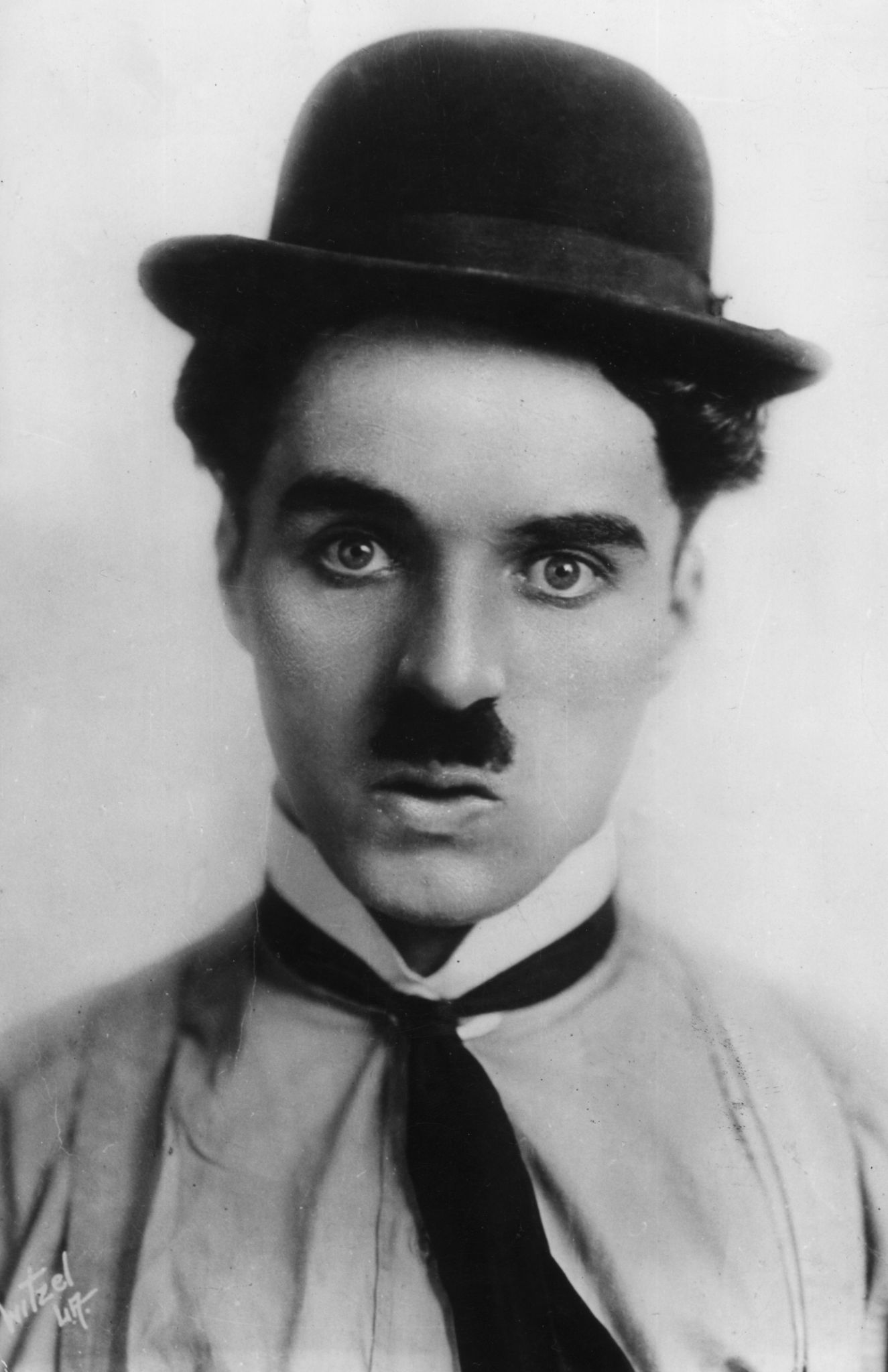
Birth Name
Charles Spencer Chaplin
Birth Date
1889 April 16
Birth Location
Walworth, London, England, UK
Height
163 cm
Professions
Also Known As
- Ch.Chaplin
- Charlie Chaplin
- Sir Charles Spencer Chaplin
- Sir Charles Chaplin
- Chaplin
- Charlie
- Charlot
IMDb ID
Wikipedia Article
# Charles Chaplin
Charles Chaplin, an iconic figure in the realm of cinema, is renowned for his pioneering contributions to the film industry as an actor, director, and composer. Born on April 16, 1889, in Walworth, London, England, Chaplin stood at a height of 163 cm. His illustrious career spanned several decades, during which he became a defining symbol of silent film and an enduring cultural icon. Notable for his creation of the beloved character "The Tramp," Chaplin's work not only entertained audiences but also offered poignant social commentary, making him one of the most significant figures in film history.
Quick Facts: Birth Name: Charles Spencer Chaplin Birth Date: April 16, 1889 Birthplace: Walworth, London, England, UK Height: 163 cm Occupations: Actor, director, composer, producer Years Active: 1914–1967 Known As: The Tramp
Early Life and Education
Charles Chaplin was born into a modest family. His father, Charles Chaplin Sr., was a musician and his mother, Hannah Chaplin, was a singer and actress. The family faced considerable financial difficulties, particularly after the early death of his father. This instability in his early years fostered in him a profound sense of empathy for the underprivileged, a theme that would recur throughout his work.
During his childhood, Chaplin and his brother, Sydney, were often left in the care of their mother, who struggled with mental health issues. At the age of seven, Chaplin began performing on stage, showcasing a natural talent for comedy and drama. His early exposure to the entertainment industry ignited a passion for performance, leading him to join a troupe of child performers known as "The Eight Lancashire Lads."
Chaplin's formative years were marked by hardship and resilience. His experiences navigating the streets of London instilled in him a unique perspective on social issues and human suffering, which would later manifest in his cinematic storytelling. Though he had little formal education, his innate creativity flourished, providing a foundation for his future in film.
Career
Chaplin's career began in the early 1900s when he joined the Fred Karno Company, a British vaudeville troupe that toured the United States. This experience not only honed his comedic skills but also introduced him to American audiences. His first film appearance came in 1914 when he signed with Keystone Studios, where he created the character that would become emblematic of his work: The Tramp. This character, with his bowler hat, toothbrush mustache, and cane, became a universal symbol of the everyman, embodying the struggles and resilience of the common person.
Chaplin's breakthrough came with the release of "Kid Auto Races at Venice," which introduced The Tramp to the world. His unique blend of physical comedy, pathos, and social commentary resonated with audiences, propelling him to stardom. Throughout the 1910s and 1920s, Chaplin continued to develop his craft, producing a string of successful films that showcased his unparalleled ability to blend humor with poignant social messages. Works such as "The Kid," "The Gold Rush," and "City Lights" solidified his status as one of the foremost filmmakers of his time.
The peak of Chaplin's career occurred in the late 1920s and early 1930s, during which he produced some of his most acclaimed works. "Modern Times," released in 1936, is often regarded as one of his masterpieces, as it critiques the dehumanizing effects of industrialization while maintaining a comedic tone. This film was notable for its commentary on the Great Depression, a theme that resonated deeply with audiences facing economic hardships.
In addition to acting, Chaplin took on roles as a writer, director, and composer, showcasing his multifaceted talent. His ability to control every aspect of filmmaking allowed him to create a distinct style that blended humor, music, and social critique. His later works, such as "The Great Dictator" (1940), further demonstrated his willingness to tackle difficult subjects, using comedy to address the rise of fascism and totalitarian regimes.
As the film industry transitioned to sound, Chaplin's reluctance to embrace this new technology led to a decline in his popularity. However, his commitment to silent film art remained unwavering. He continued to create films that resonated with audiences, albeit with less frequency. In the 1950s, Chaplin shifted his focus towards directing and producing, culminating in works like "Limelight" (1952), which reflected his introspection and nostalgia for the silent film era.
Personal Life
Charles Chaplin's personal life was as complex and intriguing as his cinematic creations. He was married four times, with his relationships often drawing media attention. His first marriage to Mildred Harris in 1918 ended in divorce, followed by a brief union with Lita Grey, with whom he had two sons. His third marriage to Paulette Goddard was also short-lived, but it was his final marriage to Oona O'Neill, the daughter of playwright Eugene O'Neill, that brought him lasting happiness. They married in 1943 and had eight children together, forming a close-knit family that remained supportive throughout his career.
Chaplin's public persona was that of a charming and affable figure, but he also faced controversies, particularly regarding his political beliefs and personal life. His outspoken views on social issues and his critique of capitalism garnered both admiration and criticism. In the 1950s, during the Red Scare, he found himself targeted by the U.S. government due to his perceived political affiliations, which led to his exile from America.
Despite these challenges, Chaplin maintained a reputation as a dedicated artist. He enjoyed various hobbies, including music and writing, which further enriched his creative output. His lifestyle was marked by a love for the arts, and he often surrounded himself with fellow artists and intellectuals.
Appearance
Physically, Charles Chaplin was of average height, standing at 163 cm. He was known for his distinctive appearance, characterized by his trademark bowler hat and toothbrush mustache, which became synonymous with his on-screen persona. Over the years, his hairstyle evolved, ranging from slicked-back hair to a more casual, tousled look, reflecting his character's whimsical nature.
Chaplin's appearance contributed significantly to his comedic style. His expressive face and body language conveyed a wide range of emotions, allowing him to connect with audiences without the need for dialogue. Although he did not have any prominent tattoos, his carefully crafted image became iconic, influencing generations of performers and filmmakers.
Filmography Overview
Throughout his prolific career, Charles Chaplin became known for a diverse array of projects, primarily in the silent film genre. His films often featured a blend of comedy and drama, tackling themes of poverty, industrialization, and social justice. Chaplin's ability to evoke laughter while simultaneously addressing serious societal issues set him apart from his contemporaries.
His legacy is evident in the numerous films he produced, directed, and acted in, many of which are considered classics. Chaplin's influence can be seen in the works of later filmmakers who incorporated his techniques of physical comedy and visual storytelling into their own projects. His films continue to be studied for their artistic merit and social relevance, solidifying his status as a monumental figure in the history of cinema.
Awards and Achievements
Charles Chaplin's contributions to film were recognized through numerous awards and accolades during his lifetime and posthumously. He received several Academy Awards, including an honorary Oscar in 1972, acknowledging his impact on the film industry and his innovative spirit. His work has been celebrated at various film festivals and retrospectives, further cementing his legacy as a pioneer of cinema.
Chaplin's films, including "The Great Dictator," earned critical acclaim and are still regarded as masterpieces of storytelling and artistry. His ability to transcend language barriers with visual humor and emotional depth has ensured that his work remains relevant, captivating audiences across generations.
Legacy
The influence of Charles Chaplin on cinema and culture is profound and enduring. He is often credited with helping to shape the silent film era and laying the groundwork for modern filmmaking. His innovative techniques, such as the use of slapstick humor combined with emotional storytelling, have left an indelible mark on the industry.
Chaplin's work continues to resonate with audiences today, demonstrating the timelessness of his themes and characters. His portrayal of The Tramp, a symbol of resilience and humanity, remains a powerful reminder of the struggles faced by individuals in society. The legacy of Charles Chaplin is not merely that of a prolific filmmaker but of a cultural touchstone whose impact is felt in the hearts of those who appreciate the art of storytelling.
Net Worth
Estimating the net worth of an iconic figure like Charlie Chaplin is a fascinating endeavor, as it requires us to navigate through both historical data and contemporary interpretations of wealth. Various celebrity net-worth websites have attempted to quantify Chaplin's financial legacy, but discrepancies among them often arise due to the lack of concrete financial records, the challenges of valuing legacy assets, and the subjective nature of estimating historical earnings. For example, Celebrity Net Worth cites Chaplin's net worth at approximately $400 million; WealthyGorilla suggests a figure closer to $500 million, while TheRichest offers a lower estimate in the ballpark of $150 million. Such differences can grate on your belief system, especially when you consider that the calculations are often based on a mixture of reported earnings, assets, and the perceived value of his contributions to film and culture.
The limitations of these estimates are evident. They tend to overlook the fact that Chaplin's wealth was not just about cash in the bank; it encompassed properties, royalties, and the intangible value of his brand. Additionally, many of these sites may not fully account for the fluctuations in the entertainment industry and how they impact an actor's earnings. Chaplin was not only a film star; he was a pioneer of the film industry, which complicates any straightforward analysis of his financial standing.
Now, let’s dig deeper into the logic behind estimating an actor's earnings, specifically for someone like Chaplin, who thrived in a different era of Hollywood. During the early to mid-20th century, salaries for supporting actors varied significantly depending on their billing position and the film's budget. Chaplin, being a leading man and a director, typically commanded a higher salary due to his creative control and star power. Back then, major films often had budgets ranging from a few hundred thousand dollars to several million, influencing the pay scale across the board.
For example, billing position plays a massive role in negotiation power. Actors at the top of the marquee often receive a greater share of the profits, while supporting roles might settle for a flat fee or a percentage based on box office performance. When it comes to television, the compensation per episode can range widely, especially as the industry evolved. In Chaplin's day, television wasn't even on the radar, but if we were to extend our analysis to contemporary actors, one might see paychecks ranging from a couple of thousand dollars to millions for top-tier talent.
Now, to give a clearer picture of Chaplin's financial landscape, let’s summarize his major films, their approximate budgets, and my estimated earnings for him in each project:
```html
| Film Title | Approximate Budget | Estimated Earnings for Chaplin |
|---|---|---|
| The Kid (1921) | $500,000 | $100,000 |
| City Lights (1931) | $1.5 million | $200,000 |
| Modern Times (1936) | $1.5 million | $300,000 |
| The Great Dictator (1940) | $2 million | $500,000 |
| Limelight (1952) | $1 million | $250,000 |
```
Now, diving deeper into each film, "The Kid," which marked Chaplin's first full-length film, had an approximate budget of $500,000. I estimate that he earned around $100,000 from it, a sizable chunk for the time, given his role as both lead actor and director. Moving on to "City Lights," despite its modest budget of $1.5 million, Chaplin’s innovative storytelling and popularity might have allowed him to negotiate a salary of about $200,000.
"Modern Times" is another significant entry, with a similar budget, but it showcased Chaplin's evolving artistry, potentially boosting his earnings to around $300,000. The film was a massive hit, and his stature allowed him to ask for more. "The Great Dictator" had a bigger budget of about $2 million, and considering its impact and Chaplin's position as both star and creator, I would estimate his earnings to be around $500,000. Lastly, "Limelight," while it had a budget of $1 million, saw Chaplin's earnings dip slightly, as the film didn't perform as well commercially, leading to an estimated $250,000 payout.
When I sum up these estimates, Chaplin’s earnings from these major films alone would approximate to around $1.45 million. Of course, this figure doesn’t encapsulate his entire career; it’s merely a slice of his financial journey. Adding in potential earnings from his other projects, royalties from classic films, and real estate holdings, it wouldn't be unreasonable to consider a lifetime earnings estimate significantly higher than the initial film earnings suggest.
When juxtaposed with the net worth estimates from celebrity websites, my calculations reveal a nuanced picture. Chaplin's legacy, cultural impact, and various revenue streams likely place his actual net worth higher than many of these estimates. The discrepancies can often be attributed to the psychological factors that influence how we perceive wealth, especially for an artist who redefined cinema.
In conclusion, after synthesizing the external data from net-worth websites and my independent estimations based on film budgets and earnings, I would suggest a realistic net worth range for Charlie Chaplin of between $400 million and $600 million. This range captures the essence of his legacy while acknowledging the inherent uncertainties in estimating the wealth of a historical figure whose contributions continue to resonate today.