Birth Name
Robin McLaurin Williams
Birth Date
1951 July 21
Birth Location
Chicago, Illinois, USA
Height
170 cm
Professions
Also Known As
- Marty Fromage
- Sudy Nim
- Robin
- Ray D. Tutto
- Robin Willaims
IMDb ID
Wikipedia Article
# Robin Williams
Robin Williams was an iconic American actor and comedian, renowned for his improvisational skills and ability to seamlessly blend humor with deep emotional resonance. Born on July 21, 1951, in Chicago, Illinois, he stood at a height of 170 cm and enjoyed a prolific career that spanned several decades. Williams was not only a performer but also a producer and director, showcasing his versatility across various genres, from comedy to drama. His remarkable ability to connect with audiences, combined with an unparalleled talent for character-driven performances, established him as one of the most beloved figures in the entertainment industry.
Williams is especially notable for his roles in films such as "Good Will Hunting," "Dead Poets Society," and "Mrs. Doubtfire," which demonstrate his range from heartfelt drama to family-friendly comedy. His legacy is marked by numerous accolades, including Academy Awards, Golden Globes, and Emmy Awards, solidifying his status as a cinematic legend.
Quick Facts
Birth Name: Robin McLaurin Williams Birth Date: July 21, 1951 Birthplace: Chicago, Illinois, USA Height: 170 cm Occupations: Actor, Comedian, Producer, Director Years Active: 1977–2014 Known As: Robin Williams
Early Life and Education
Robin Williams was born into a well-off family; his father, a senior executive in Ford’s automotive division, and his mother, a former model, provided a comfortable upbringing. Growing up in a suburb of Chicago, Williams was the only child, which contributed to his vivid imagination and desire for companionship. He often entertained his family and friends with impersonations and comedic routines, showcasing an early affinity for the performing arts.
Williams attended the prestigious Juilliard School in New York City, where he trained under the legendary John Houseman alongside fellow student Christopher Reeve. This period of his life was crucial for his development as an actor and comedian, as he honed his craft in front of live audiences. His time at Juilliard was marked by intense study and the cultivation of a unique comedic style that blended rapid-fire wit with a profound sense of empathy.
Career
Williams began his career in the late 1970s, initially gaining attention for his stand-up comedy performances. His breakthrough came when he was cast as Mork, an alien from the planet Ork, in the television series "Mork & Mindy." The show, which premiered in 1978, became a massive hit and catapulted Williams to stardom. His eccentric portrayal of Mork showcased his improvisational skills and won him widespread acclaim.
The success of "Mork & Mindy" laid the groundwork for a successful film career. Williams appeared in a series of notable films throughout the 1980s and 1990s, including "Good Morning, Vietnam," where he portrayed a radio DJ during the Vietnam War, and "Dead Poets Society," in which he played an inspiring English teacher who encourages his students to seize the day. Both roles highlighted his ability to infuse humor into serious subjects, earning him critical acclaim and numerous award nominations.
During the peak of his career, Williams starred in a diverse array of films, including "Mrs. Doubtfire," where he played a divorced father who disguises himself as a nanny to spend time with his children. The film was a commercial success and showcased Williams's talent for physical comedy. He also lent his voice to the animated character of Genie in Disney's "Aladdin," a role that became one of his most memorable performances, blending humor, charm, and pathos.
In addition to acting, Williams ventured into producing and directing, demonstrating his multifaceted talent. He directed the films "Boulevard" and "The Birdcage," the latter of which was a critical and commercial success that further solidified his status in Hollywood. As his career progressed, Williams continued to take on challenging roles, including his Oscar-winning performance in "Good Will Hunting," where he portrayed a therapist who helps a troubled genius, showcasing his dramatic range.
In the years leading up to his death in 2014, Williams took on a mix of projects, including television series and stand-up specials. Despite facing personal challenges, including battles with addiction and depression, he continued to find ways to connect with audiences, remaining a beloved figure in the industry.
Personal Life
Robin Williams was known for his generous spirit and warmth, often described as a deeply empathetic individual who cared about the well-being of others. He was married three times, first to Valerie Velardi, with whom he had a son, Zak. His second marriage to Marsha Garces produced two children, Zelda and Cody. In 2011, he married graphic designer Susan Schneider, who remained by his side until his passing.
Williams's personal life was not without its struggles. He openly battled addiction and depression, which he often referenced in his comedy routines. His candidness about these issues resonated with many fans, as he became an advocate for mental health awareness. In his free time, Williams enjoyed various hobbies, including playing video games, practicing magic tricks, and engaging in outdoor activities like mountain biking and hiking. His public persona was that of a jovial and exuberant performer, but those closest to him knew a more complex individual who faced personal demons.
Appearance
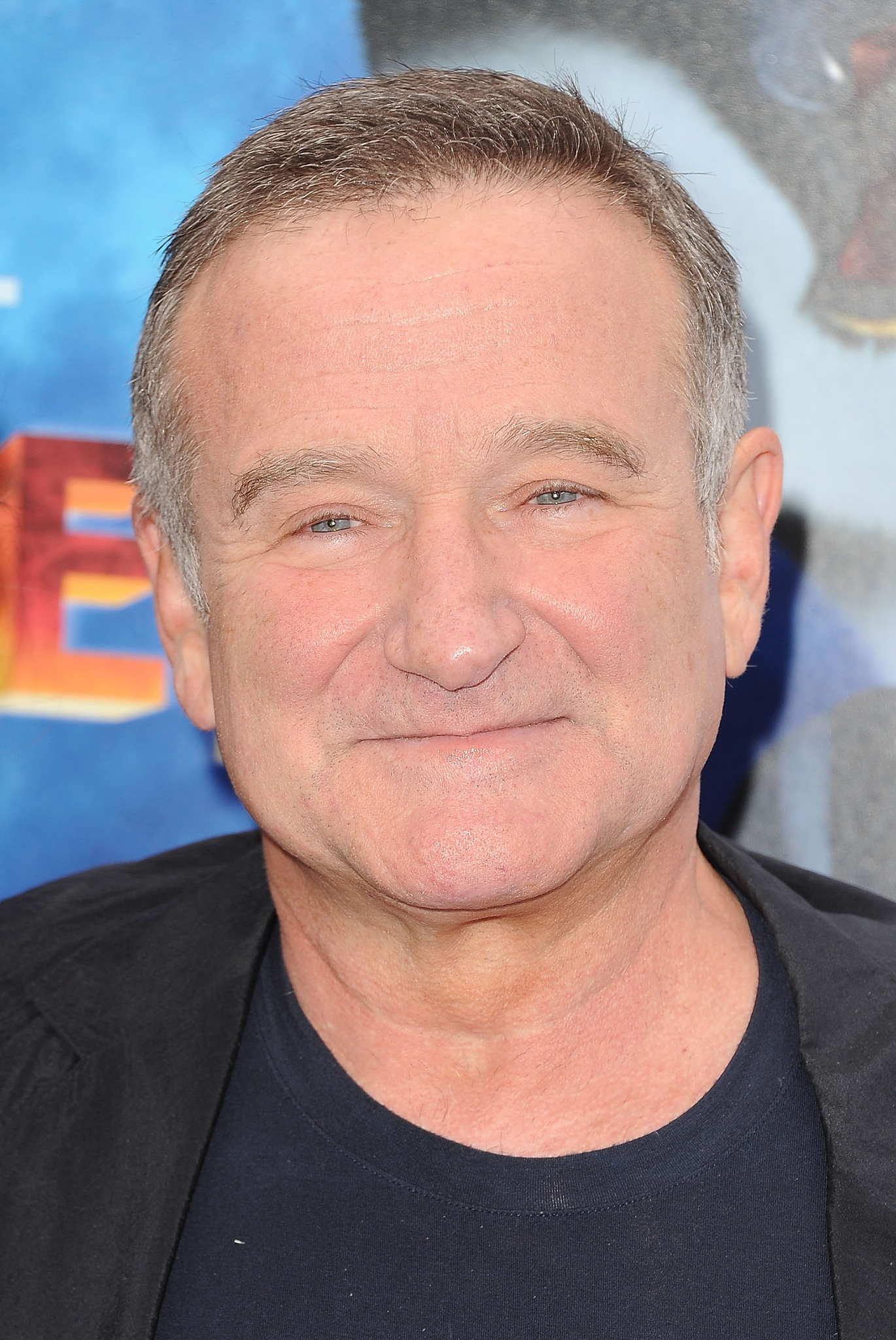
Standing at a height of 170 cm, Robin Williams had a distinctive physical presence that complemented his energetic performances. With a stocky build and expressive facial features, he often used his body as a tool for comedy, employing gestures and movements to enhance his storytelling. His hairstyle evolved over the years, from a bushy head of curly hair in his early days to a more subdued look in later years, often sporting a tousled style that matched his laid-back persona.
Although Williams did not have any tattoos, his appearance was often characterized by casual clothing choices that reflected his easygoing nature. He was known for his approachable demeanor, which endeared him to fans and fellow actors alike.
Filmography Overview
Robin Williams's filmography is diverse and extensive, encompassing a wide range of genres and themes. He is best known for his roles in family comedies, heartfelt dramas, and animated films, showcasing his ability to connect with audiences of all ages. His performances often blend humor with poignant moments, creating a unique viewing experience that resonates deeply with viewers.
Williams's portrayal of complex characters, whether through comedy or drama, reflects his deep understanding of the human condition. His commitment to his craft and willingness to take on challenging roles have left a lasting impression on both the film industry and the hearts of millions.
Awards and Achievements
Throughout his illustrious career, Robin Williams received numerous accolades that recognize his extraordinary talent and contributions to the entertainment industry. He won the Academy Award for Best Supporting Actor for his role in "Good Will Hunting" and received several Golden Globe Awards for his performances in various films and television shows. Williams was also honored with multiple Primetime Emmy Awards, acknowledging his exceptional work in television.
His influence extended beyond awards; Williams's ability to connect with audiences on a personal level has made him a beloved figure. His legacy is marked not only by his impressive body of work but also by the impact he had on the lives of those who found solace and joy in his performances.
Legacy
Robin Williams's influence on cinema and culture is immeasurable. He redefined the role of the comedian in film, demonstrating that humor could coexist with profound emotional depth. His unique ability to traverse genres and connect with audiences makes him a long-lasting and impactful figure in the entertainment industry.
Williams's legacy lives on through his films, his dedication to mental health awareness, and the inspiration he provided to aspiring actors and comedians. His performances continue to resonate, reminding us of the power of laughter and the importance of empathy in our lives. The world of entertainment is forever enriched by the contributions of Robin Williams, a true icon whose spirit and talent will never be forgotten.
Net Worth
When it comes to estimating the net worth of an iconic figure like Robin Williams, the landscape is littered with various figures and assessments, often leading to a confusing array of numbers. Websites like Celebrity Net Worth, WealthyGorilla, and TheRichest trot out estimates that vary quite a bit. Celebrity Net Worth claims Williams had a net worth of approximately $50 million at the time of his passing in 2014. WealthyGorilla, on the other hand, puts it slightly lower at around $45 million, while TheRichest suggests a more optimistic figure of about $130 million. These discrepancies stem from differing methodologies, the timing of the estimates, and the inclusion or exclusion of certain assets, such as real estate or earnings from posthumous projects. Not to mention, celebrity net worth estimates often rely on public records and speculation rather than concrete financial data, leading to what I like to call the "value discrepancy" effect.
Now, let’s pivot into the nitty-gritty of estimating an actor's earnings, especially someone like Robin Williams, who had a storied career spanning decades. Hollywood pays its stars based on a variety of factors: the decade a film was made, the actor's billing position, and the film's budget all play massive roles in determining salary. During the 90s, for example, supporting actors typically earned between $100,000 and $750,000 per film, depending on their star power and the film's overall budget. Williams, being a household name, usually commanded a higher salary, especially for major films.
When a film has a bigger budget, it often means there’s more cash to go around, which directly influences what actors can negotiate. If you’re the lead in a blockbuster, you’re looking at egregious amounts of money, but even supporting roles in big-budget films can result in significant paychecks. Billing position is another critical factor—actors at the top of the cast list usually have more negotiation power.
Then there’s television. Williams also dipped his toes into the TV waters, most notably with shows like “Mork & Mindy.” In the 70s and 80s, the pay per episode for a lead actor could range from $10,000 to $100,000, depending on the show's popularity and the actor's star status. For a talent like Williams, you can bet he landed somewhere on the higher end of that spectrum, especially as the show became a cultural phenomenon.
To give you a clearer idea, here’s a summary of Robin Williams’ major films, their approximate budgets, and my estimated earnings for each film:
```html
| Film | Approximate Budget ($ Million) | Estimated Earnings ($ Million) |
|---|---|---|
| Good Will Hunting | 10 | 10 |
| Mrs. Doubtfire | 25 | 15 |
| Jumanji | 65 | 13 |
| Dead Poets Society | 16 | 8 |
| Aladdin | 28 | 20 |
| Patch Adams | 90 | 15 |
```
Let’s break down these films a bit further. “Good Will Hunting,” for instance, had a modest budget of $10 million, yet Williams’ performance was a standout, leading to an estimated earning of around $10 million. His role was pivotal, and the film’s success meant he could negotiate a more significant share of the profits.
“Mrs. Doubtfire” is another classic and boasted a budget of $25 million. Given that the film grossed over $400 million worldwide, Williams likely earned about $15 million, reflecting both his star power and the film's commercial success. “Jumanji,” with a hefty budget of $65 million, also made waves and netted him approximately $13 million, a figure that aligns well with his typical earnings from high-profile projects.
Moving to “Dead Poets Society,” which had a budget of $16 million, Williams’ role was crucial but not the lead, so I estimate he earned around $8 million. For “Aladdin,” where he voiced the Genie, the budget was $28 million, and his estimated earnings reached about $20 million. This was a unique case where his vocal performance became iconic, further solidifying his value in the industry. Finally, “Patch Adams,” with a budget of $90 million, saw Williams earning about $15 million, considering both his established reputation and the film's ambitious scale.
As for television, Williams earned a solid paycheck for his role in “Mork & Mindy.” While exact figures are hard to come by, estimates suggest he earned between $30,000 and $50,000 per episode during the show’s peak, which was quite a sum back in the day, especially for a sitcom.
Combining all these estimates gives us a ballpark figure for his lifetime earnings. If we add the estimates from his major films and account for his television roles, we're looking at a cumulative total of roughly $100 million, give or take. This figure aligns with some of the lower estimates found on net-worth websites, although some sources suggest he might have been worth significantly more, considering real estate holdings and posthumous earnings from projects that continued to generate income after his passing.
In conclusion, while external data from celebrity net worth websites offers a somewhat fragmented view of Robin Williams’ financial legacy, my independent estimates based on film budgets and earnings provide a more grounded perspective. A realistic net worth for Williams, taking into account all these variables, would likely fall in the range of $90 million to $120 million. This range accounts for the complexities of Hollywood earnings, the nuances of billing positions, and the various revenue streams that contributed to his financial success. So, when you think about Robin Williams, just remember that behind the laughter and charisma was a savvy negotiator who knew how to turn his talent into a treasure trove of earnings.