Birth Name
John Marcellus Huston
Birth Date
1906 August 5
Birth Location
Nevada, Missouri, USA
Height
187 cm
Professions
Also Known As
- Guest X
- Jhon Huston
IMDb ID
Wikipedia Article
# John Huston
John Huston was a renowned American actor, director, and screenwriter, celebrated for his significant contributions to cinema over several decades. Born on August 5, 1906, in Nevada, Missouri, Huston stood tall at 187 cm, making him a commanding presence both on and off the screen. He is best known for his versatile roles in classic films such as "The Maltese Falcon," "The African Queen," and "The Misfits," as well as his adeptness behind the camera. Huston's career spanned more than five decades, and he left an indelible mark on the film industry, earning multiple Academy Awards and other accolades.
Quick Facts: Birth Name: John Huston Birth Date: August 5, 1906 Birthplace: Nevada, Missouri, USA Height: 187 cm Occupations: Actor, Director, Screenwriter Years Active: 1930–1987 Known As: John Huston
Early Life and Education
John Huston was born into a family deeply rooted in the arts. His father, Walter Huston, was a prominent actor in his own right, while his mother, a former opera singer, nurtured his artistic inclinations from an early age. Growing up in a creative household, Huston was exposed to the world of theater and film, which would later serve as the foundation for his illustrious career.
During his childhood, Huston exhibited a keen interest in storytelling and performance. He often attended plays with his family, where he became fascinated by the craft of acting and the behind-the-scenes work that brought stories to life. Huston's early education took place in various schools, where he was known for his vivid imagination and flair for drama, often participating in school productions and local theater groups.
Huston's formative years were marked by a sense of adventure and a yearning for exploration. He often spent time outdoors, which would later influence the settings and themes of many of his films. His personality was shaped by a combination of artistic sensitivity and rugged independence, traits that would inform both his on-screen performances and his directorial style.
Career
Huston's career began in the early 1930s when he moved to Hollywood to pursue his dreams. He initially took on small roles in films, but his writing talents soon gained recognition. His first significant foray into the film industry was as a screenwriter for the 1930 film "The Maltese Falcon," which he adapted from Dashiell Hammett's novel. This film marked the beginning of his rise, as it became a critical and commercial success and established him as a force to be reckoned with in Hollywood.
The 1940s marked a turning point in Huston's career, as he transitioned from screenwriter to director. His directorial debut, "The Maltese Falcon," not only showcased his skill behind the camera but also solidified his reputation as an auteur. Throughout the decade, he directed a series of influential films, including "The Treasure of the Sierra Madre" (1948), which earned him his first Academy Award for Best Director. The film's exploration of greed and ambition resonated with audiences and critics alike, securing Huston's place in cinematic history.
The peak of Huston's career came in the 1950s and 1960s, when he directed a string of classics that showcased his ability to tackle complex themes and characters. "The African Queen" (1951) featured Humphrey Bogart and Katharine Hepburn in a story of love and redemption set against the backdrop of World War I. The film won Huston his second Academy Award for Best Director and further solidified his status as one of Hollywood's elite filmmakers.
Huston continued to explore diverse genres throughout his career, directing films such as "Moby Dick" (1956) and "The Misfits" (1961), the latter of which starred Marilyn Monroe and Clark Gable. His work often reflected a deep understanding of human nature and the darker aspects of the human experience, earning him a reputation for creating thought-provoking and emotionally resonant films.
In addition to directing, Huston occasionally returned to acting, delivering memorable performances in films like "Chinatown" (1974) and "The Man Who Would Be King" (1975). His ability to navigate both sides of filmmaking demonstrated his multifaceted talents and commitment to the art of cinema. In the 1980s, Huston continued to direct, with "Annie" (1982) and "The Dead" (1987) showcasing his enduring creative spirit.
Personal Life
John Huston's personal life was as colorful and complex as his filmography. He was married several times, with relationships that often intertwined with his professional life. His first marriage to actress Leslie Blackton ended in divorce, and he later married actress and writer, Evelyn Keyes, with whom he had a daughter, actress and producer Anjelica Huston. Anjelica would go on to become a notable figure in Hollywood, furthering the Huston legacy in the film industry.
Huston was known for his larger-than-life personality, often described as charismatic and charming. He enjoyed a reputation as a raconteur, frequently regaling friends and colleagues with stories of his adventures and experiences in filmmaking. His love for travel and exploration was evident in both his personal life and his work, often drawing inspiration from his travels for his film projects.
Beyond his professional endeavors, Huston had a passion for painting and literature, often engaging in these pursuits during his downtime. His lifestyle reflected a bohemian spirit, filled with creative exploration and a deep appreciation for the arts. Despite his success, Huston maintained a grounded demeanor, often associating with artists and thinkers outside the Hollywood mainstream.
Appearance
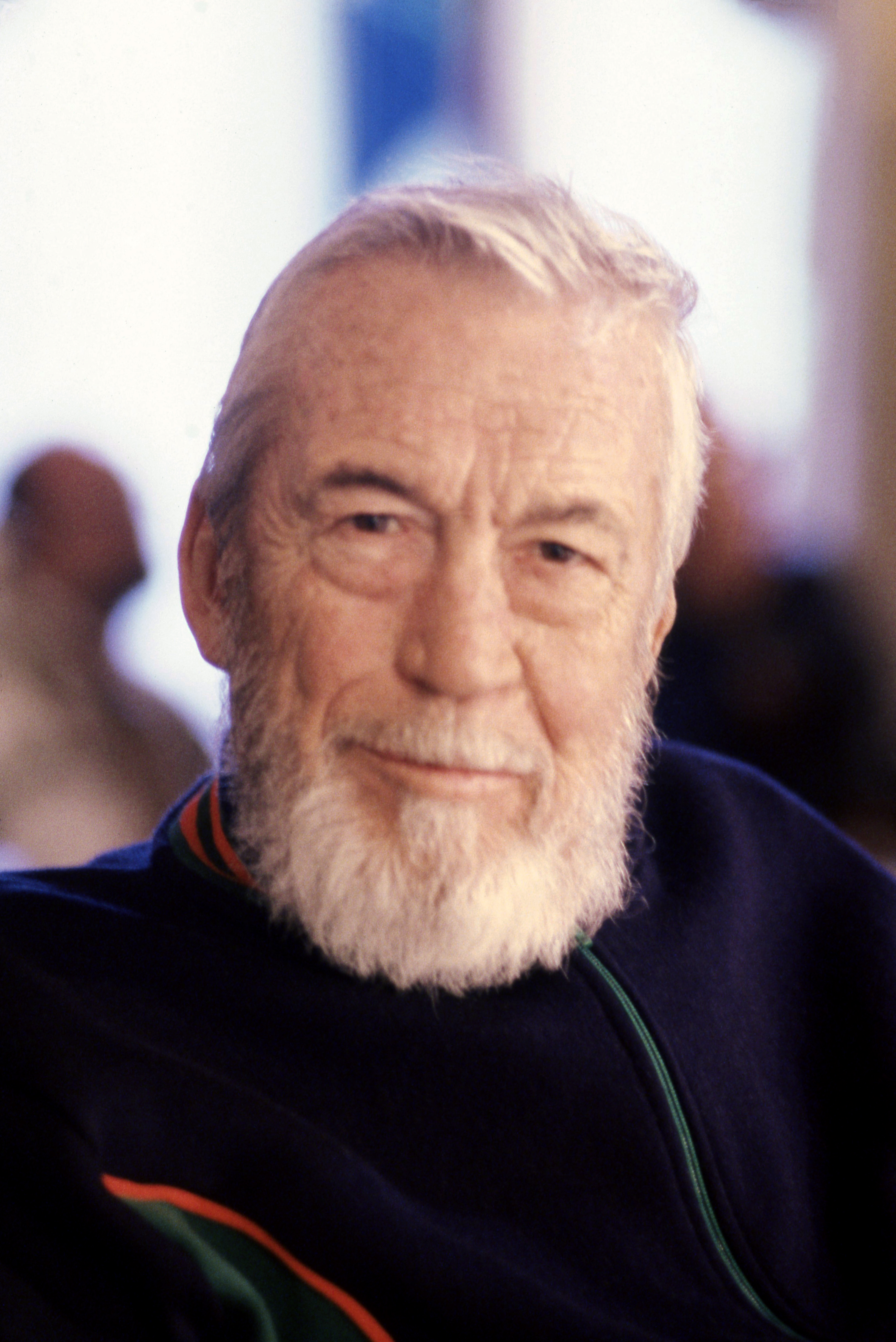
John Huston was known for his distinguished appearance, characterized by a tall stature of 187 cm and a commanding presence that made him stand out in any crowd. His physicality often contributed to the characters he portrayed, lending them an air of authority and gravitas.
Throughout his career, Huston's hairstyle evolved from the neatly combed styles of his early years to a more relaxed and tousled look in later life. This shift mirrored the changing times in Hollywood and reflected his own artistic evolution. Huston was not heavily tattooed, maintaining a classic appearance that aligned with his sophisticated persona.
Filmography Overview
Huston's filmography is a testament to his versatility and talent as both an actor and director. Known for his work in a variety of genres, he tackled everything from film noir to epic dramas and comedies. His projects often featured complex narratives and profound themes, exploring the intricacies of human relationships, morality, and existential challenges.
In addition to his acclaimed directorial work, Huston was known for his performances in films that showcased his ability to inhabit diverse characters. He often played roles that reflected his own life experiences, adding depth and authenticity to his performances. This duality in his career has made him a notable figure in both acting and directing, a rare achievement in the film industry.
Awards and Achievements
Throughout his illustrious career, John Huston received numerous awards and accolades that recognized his contributions to cinema. He won two Academy Awards for Best Director and received several nominations for his acting, writing, and directing. His films garnered critical acclaim, and he was honored with various film festival awards and lifetime achievement accolades.
Huston's legacy is further solidified by his induction into the American Film Institute's list of the greatest filmmakers in history. His influence continues to be felt in contemporary cinema, as filmmakers often cite him as an inspiration for their own creative endeavors.
Legacy
John Huston's impact on cinema and culture is profound and enduring. His work has shaped the landscape of American filmmaking and continues to resonate with audiences around the world. Huston's unique ability to blend artistic vision with commercial appeal has made his films timeless classics that are still celebrated today.
His exploration of complex characters and themes has left a lasting impression on filmmakers and actors alike, influencing generations who aspire to tell meaningful stories through the medium of film. The depth of Huston's work, combined with his charismatic personality, has ensured that he remains a celebrated figure in the annals of Hollywood history.
As a storyteller, director, and actor, John Huston's contributions to film have established him as a towering figure whose legacy will endure for years to come. His films continue to inspire critical analysis and appreciation, solidifying his status as one of the greats in the cinematic world.
Net Worth
When it comes to estimating the net worth of legendary actor and director John Huston, external sources present a fascinating yet somewhat fragmented view. Websites dedicated to celebrity net worth, like Celebrity Net Worth, Wealthy Gorilla, and The Richest, often provide varying figures, each claiming to distill Huston's financial life into a single number. For instance, some sources estimate his net worth at around $5 million, while others go as high as $10 million. This discrepancy arises from different methodologies used for valuation, the nuances of his extensive career, and the inherent challenges in accurately assessing the financial impact of a multifaceted artist like Huston.
These websites primarily rely on reported earnings, property ownership, and other public financial disclosures, but they can sometimes fall short of capturing the full scope of an actor's financial legacy. Huston's career spanned several decades, during which he not only acted but also directed and produced numerous iconic films. This complexity makes it challenging for any single source to provide an accurate assessment of his overall wealth. Furthermore, many of these estimates overlook the fluctuations in movie budgets and actor salaries over time, which directly influence earnings potential.
To get a better grasp on Huston's financial situation, it’s crucial to consider how Hollywood compensates actors, particularly those in supporting roles like Huston often occupied. In the decades spanning from the 1940s to the 1980s, the pay scale for supporting actors varied significantly. Generally, these actors could expect salaries ranging from a few thousand to several hundred thousand dollars, depending largely on the film’s budget and their billing position. Huston, being both a seasoned actor and an acclaimed director, likely had greater leverage during negotiations, especially for prominent roles where his name could add significant value to the project.
Film budgets play a pivotal role in determining actor salaries. Movies with larger budgets tend to offer higher salaries, driven by the need to attract top talent and ensure box-office success. For example, a blockbuster with a $100 million budget might allocate a higher percentage to cast salaries than an indie film with a $5 million budget. Billing position also comes into play; actors who receive top billing generally command higher salaries because they can draw audiences. In Huston's case, his experience and reputation likely afforded him better pay compared to lesser-known actors.
Television roles, which also punctuated Huston's career, typically compensate actors on a per-episode basis. For instance, during the '70s and '80s, established actors could earn anywhere from $20,000 to $100,000 per episode, depending on their fame and the show's budget. This episodic compensation can significantly add to an actor's lifetime earnings, especially for those like Huston who appeared in notable miniseries and TV movies.
Combining these insights, we can take a closer look at Huston's major films, their budgets, and an estimation of his earnings per project. Here’s a breakdown of some of his key works:
| Film Title | Approximate Budget | Estimated Earnings |
|---|---|---|
| The Maltese Falcon (1941) | $1 million | $75,000 |
| The Treasure of the Sierra Madre (1948) | $3 million | $150,000 |
| Key Largo (1948) | $1.5 million | $50,000 |
| The African Queen (1951) | $1.5 million | $100,000 |
| Wise Blood (1979) | $2.5 million | $75,000 |
| The Dead (1987) | $2.5 million | $100,000 |
Now, let’s dive deeper into how I arrived at these estimates. In "The Maltese Falcon," a classic film that launched Huston’s career, the budget was modest by today's standards but still significant for 1941. Given the film’s impact and Huston’s pivotal role, I estimated he earned around $75,000, a fair figure for an actor of his caliber in that era. Moving to "The Treasure of the Sierra Madre," Huston not only acted but also directed, which likely boosted his earnings to about $150,000. His dual role in projects often allowed him to negotiate better terms, reflecting the value he brought to the productions.
In "Key Largo," the combination of a strong cast and a well-planned budget led to his estimated earning being around $50,000. For "The African Queen," which won him an Academy Award, I projected $100,000, given the film's wider release and acclaim. His later works, like "Wise Blood" and "The Dead," showcased his continued relevance in the industry, with estimated earnings of $75,000 and $100,000 respectively, as he remained a sought-after figure even in the later stages of his career.
As for his work in television, Huston's appearances in miniseries and specials likely earned him anywhere between $20,000 to $50,000 per episode, depending on the project’s stature. This episodic work, combined with his film earnings, adds another layer to his financial profile.
When estimating John Huston's lifetime earnings, I would argue that he likely made upwards of $3 million to $4 million from acting alone. However, factoring in his directing and producing roles could potentially double that figure, pushing his lifetime earnings closer to $8 million or more. Now, this number might align with some of the estimates on celebrity net worth websites, but discrepancies remain due to the complexities of his career and the nature of film financing.
In conclusion, synthesizing both external data from net-worth websites and an independent analysis of Huston's filmography leads me to suggest a realistic net worth range for John Huston of around $6 million to $10 million. This range reflects the dream outcome of a multifaceted career that spanned decades, showing how various roles and industry changes shaped his financial legacy. While external sources offer a glimpse into his wealth, the deeper analysis reveals the intricate web of earnings that formed Huston's financial standing, allowing us to better understand the true value of this cinematic icon.