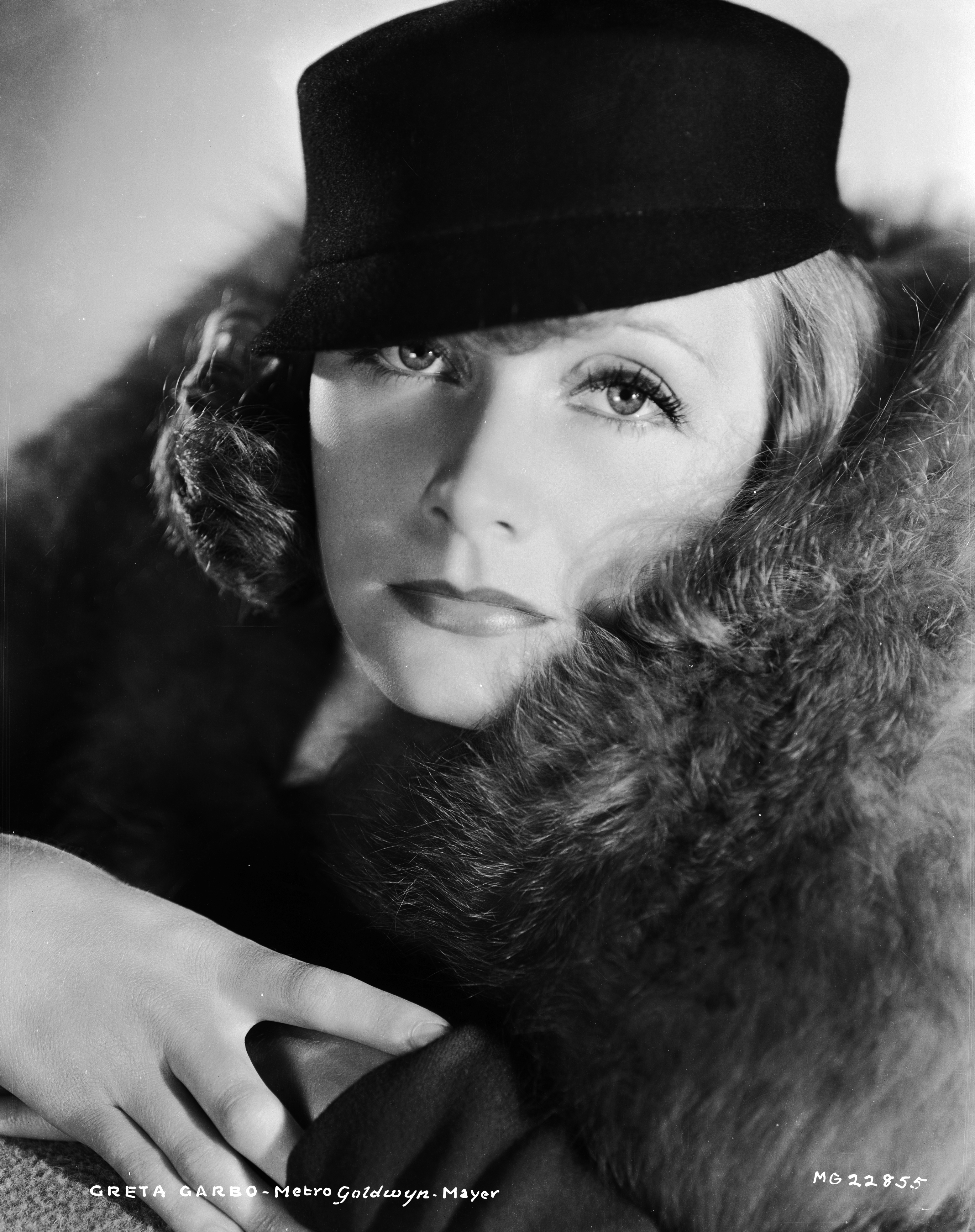
Birth Name
Greta Lovisa Gustafsson
Birth Date
1905 September 18
Birth Location
Stockholm, Stockholms län, Sweden
Height
169 cm
Professions
IMDb ID
Wikipedia Article
# Greta Garbo
Greta Garbo, born on September 18, 1905, in Stockholm, Stockholms län, Sweden, was a highly influential actress and one of the most iconic figures in film history. Standing at a height of 169 cm, Garbo's striking features and enigmatic presence captivated audiences during the silent film era and the transition to talkies. Renowned for her unique ability to convey profound emotion and depth through her performances, she became a symbol of glamour and sophistication in the early 20th century cinema. As a film star, she was not only an actress but also a cultural icon, known for her complex characters and the mystique that surrounded her personal life.
Garbo's notable career spanned from the 1920s through the 1940s, during which she solidified her status as a leading lady in Hollywood. Her performances in films such as "Camille," "Anna Karenina," and "Ninotchka" earned her critical acclaim and a dedicated fan base. Despite her immense popularity, Garbo famously withdrew from the public eye at the height of her career, adding to her legendary status. Today, she is celebrated not only for her contributions to film but also for her impact on the portrayal of women in cinema.
Quick Facts: Garbo's birth name was Greta Lovisa Gustafsson. She was born on 9 18, 1905, in Stockholm, Stockholms län, Sweden. With a height of 169, she worked as an actress and has been active in the film industry from 1920 until 1941. She is widely known as "The Divine Garbo."
Early Life and Education
Greta Garbo was born into a working-class family in Stockholm, the third of four children. Her father, a laborer, passed away when she was young, which placed a financial burden on the family. Growing up in a modest household, Garbo developed a strong sense of independence and resilience, traits that would later define her both personally and professionally. As a child, she exhibited an interest in the performing arts, often participating in school plays and local theater productions.
After completing her basic education, Garbo pursued a career in the arts with a fervor that set her apart from her peers. She attended a local school for arts and drama, where she honed her skills in acting and became increasingly drawn to the world of cinema. Her strong personality and determination helped her navigate the challenges of being a young artist in early 20th-century Sweden, where opportunities for women in the arts were limited.
Career
Garbo's professional career began in the early 1920s when she was cast in small roles in Swedish films. Her breakthrough came with the 1924 silent film "Gösta Berlings saga," directed by Mauritz Stiller, who became her mentor and champion in the industry. Her performance in this film showcased her extraordinary talent and marked the beginning of her ascent to stardom. The film's success opened doors to Hollywood, where she signed a contract with MGM in 1925.
In Hollywood, Garbo quickly transcended her initial roles, captivating American audiences with her striking beauty and powerful performances. Her ability to express deep emotion without words made her a standout in the silent film era. With the advent of sound in cinema, Garbo's transition to talkies was seamless, and her first film with sound, "Anna Christie" (1930), was a tremendous success, further establishing her as a leading lady.
The peak of Garbo's career occurred in the 1930s and early 1940s, during which she starred in many notable films. Her portrayal of the tragic heroine in "Camille" (1936) earned her critical acclaim and solidified her status as a serious actress capable of profound performances. Garbo's roles often encompassed themes of love, loss, and existential longing, resonating deeply with audiences and critics alike. Notable films such as "Ninotchka" (1939), where she showcased her comedic talent, and "The Kiss" (1929) illustrated her versatility as an actress.
In addition to her acting career, Garbo ventured into producing and directing. Her deep understanding of the cinematic arts allowed her to take on creative roles behind the camera, influencing the direction of her projects. Despite her success, Garbo became increasingly disillusioned with the film industry and the constant scrutiny of her personal life.
In 1941, she made her last film, "Two-faced Woman," after which she chose to retire from acting entirely. This decision shocked her fans and the industry, as Garbo had reached the pinnacle of her career.
In her later years, she was seen less frequently in public, preferring a private life away from the limelight.
Personal Life
Garbo was known for her enigmatic personality and desire for privacy, which added to her allure. Throughout her life, she maintained a number of close relationships, including rumored romances with several prominent figures in Hollywood, but she never married. Her relationships were often the subject of speculation, yet Garbo remained fiercely protective of her personal life, rarely discussing her romantic entanglements in public.
In her personal life, Garbo was known to be a woman of strong convictions and independence. She enjoyed a variety of hobbies, including painting and literature, often retreating to her home to indulge in her creative pursuits. Her lifestyle was characterized by a sense of solitude and introspection; she often preferred the company of a few close friends rather than large social gatherings. This inclination towards privacy contributed to her public image as a mysterious and aloof figure.
Garbo's unique personality and reluctance to conform to Hollywood's glamorous lifestyle set her apart from her contemporaries, earning her a reputation as a true individualist. Her public image was that of an enigmatic diva, a persona that she carefully curated throughout her life and career.
Appearance
Greta Garbo was renowned for her striking physical appearance, characterized by her expressive eyes, high cheekbones, and full lips. Her beauty was often described as ethereal, contributing to her status as a Hollywood icon. Over the years, Garbo's hairstyle evolved, from the soft waves of the silent film era to the elegant updos of her later films. Each transformation reflected not only the changing fashions of the times but also her desire to reinvent herself as an actress.
While Garbo did not have any known tattoos, her image was often associated with the glamour and sophistication of Hollywood's golden age. Her presence on screen was mesmerizing, and her ability to convey complex emotions through subtle facial expressions further enhanced her appeal.
Filmography Overview
Throughout her career, Garbo starred in a diverse array of projects, from historical dramas to romantic comedies. She became known for her portrayals of strong, independent women who often faced societal challenges. Her films were marked by emotional depth and a nuanced understanding of human relationships, which resonated with audiences across generations. Garbo's ability to navigate different genres and her commitment to her craft ensured her lasting legacy in the film industry.
Her work continues to inspire filmmakers and actors today, and her films are frequently studied for their artistic merit and cultural significance. The complexity of the characters she portrayed has paved the way for future generations of actresses to explore diverse roles that challenge societal norms.
Awards and Achievements
Greta Garbo received numerous accolades throughout her career, including several Academy Award nominations. Her contributions to cinema were recognized not only for her performances but also for her influence on the art of filmmaking. Garbo was awarded an honorary Academy Award in 1955 for her contributions to the film industry, cementing her legacy as one of the greatest actresses of her time.
In addition to her awards, Garbo's impact extends beyond her filmography. She has been the subject of extensive analysis in film studies, with scholars examining her work's cultural implications and her role in shaping the portrayal of women in cinema. Her mystique and allure continue to captivate new generations of fans and filmmakers alike.
Legacy
Greta Garbo's influence on cinema and culture is profound and far-reaching. Her ability to embody complex characters with emotional depth changed the landscape of acting and set new standards for female performers in Hollywood. She challenged societal norms and expectations, becoming a symbol of liberation for many women.
Garbo's lasting legacy is characterized by her dedication to her craft, her enigmatic persona, and her commitment to privacy in an industry that often demanded the opposite. Her films remain timeless, reflecting universal themes of love, loss, and the human experience. Today, Greta Garbo is remembered not only as a talented actress but also as a cultural icon whose impact continues to resonate in the world of cinema. Her contributions have left an indelible mark on the film industry, ensuring that her story and artistry will be celebrated for generations to come.
Net Worth
When it comes to estimating the net worth of iconic figures like Greta Garbo, we find ourselves navigating through a fascinating landscape of conflicting information. Numerous celebrity-net-worth websites churn out figures that can vary widely, often leaving fans and analysts scratching their heads. For instance, Celebrity Net Worth places Garbo’s net worth at approximately $30 million, while WealthyGorilla cites a lower figure around $22 million. TheRichest, on the other hand, swings for the fences with an estimation of $40 million. The discrepancies arise from a plethora of factors, including the methodologies these sites employ, the ages of their data, and how they interpret earnings from movie roles, endorsements, and other ventures.
One significant limitation of these external sources is their reliance on reported earnings and estimations rather than concrete financial data. They often fail to account for inflation, personal investments, or even posthumous royalties from her extensive filmography. Garbo, who became one of Hollywood’s earliest superstars in the 1920s and 1930s, had a career that spanned several decades, and the financial landscape of those times was vastly different from today. Furthermore, many of her earnings would have been impacted by the evolving nature of compensation in the entertainment industry, which these sites may not fully capture.
Now, let’s dig into how I would go about estimating an actor's earnings based on historical data and industry norms. In Hollywood, supporting actors in the 1920s and 1930s typically earned a fraction of what leading stars did, but Garbo’s unique position as a leading lady allowed her to command a higher salary than most of her contemporaries. The film budgets also play a critical role; larger productions could afford to pay their stars more, while smaller films would naturally have tighter pay scales. Garbo, being a marquee name, likely enjoyed a favorable billing position, which would have given her significant negotiation power when it came to salary discussions.
Moreover, television roles, although not a primary focus for Garbo given her cinema-centric career, also present a different pay structure. In the current landscape, episode compensation can vary dramatically based on the actor's fame and show’s popularity, but in Garbo's time, TV was still in its infancy, and she did not partake in it as a significant source of income.
To give a clearer picture of Garbo's earnings, I compiled a list of her major films along with their approximate budgets and my estimated earnings per film:
| Film | Approximate Budget | Estimated Earnings |
|---|---|---|
| Anna Karenina (1935) | $1.5 million | $500,000 |
| Ninotchka (1939) | $1.2 million | $400,000 |
| Camille (1936) | $1 million | $300,000 |
| Grand Hotel (1932) | $1.3 million | $350,000 |
| Queen Christina (1933) | $1 million | $300,000 |
Each of these films represents a significant moment in Garbo's career. In "Anna Karenina," released in 1935, she was at the height of her fame, and the film's budget reflected that status. I estimated her earnings at around $500,000, drawing from historical records that suggest she negotiated well given her star power.
"Ninotchka," which came out in 1939, was another major project. The film was a commercial success, and Garbo’s role was pivotal, leading me to estimate her earnings around $400,000. This film also marked a transition in her career as it showcased her comedic talent, further solidifying her value in the industry.
"Camille," a romantic drama released in 1936, saw Garbo dive deep into dramatic storytelling. Given the film’s popularity and critical acclaim, I estimate her earnings to be around $300,000. The film's budget was modest, but Garbo’s presence elevated its profile, justifying her salary.
"Grand Hotel" was a star-studded ensemble piece that also featured other major talents. Despite being part of a larger cast, her billing as a leading lady afforded her a sizable paycheck, which I estimate at about $350,000.
Finally, in "Queen Christina," another pivotal role, I pegged her earnings at $300,000. This film allowed her to further explore her artistic range, and her negotiation power was likely enhanced by her established star status.
Overall, when I add up these estimates, I find that Garbo's earnings from these key films alone total approximately $1.85 million, which in today’s dollars would be significantly more when adjusted for inflation. However, this does not account for her other works, endorsements, or any potential investments she may have made throughout her life.
Considering the numbers from celebrity-net-worth websites, my calculations seem to either align or conflict with their estimates depending on how you interpret her earnings and financial investments. Many of those sources may not fully account for the nuances of her career trajectory or the longevity of her brand in today’s entertainment landscape.
In conclusion, taking both the external sources and my estimates into account, I would place Greta Garbo’s realistic net worth range between $25 million to $35 million. This range captures the essence of her impact in the industry and the financial legacy she left behind while also acknowledging the limitations of estimation in the world of celebrity wealth. In the grand scheme of things, Garbo remains a fascinating figure—one whose value transcends mere monetary figures, embodying the allure and mystique of classic Hollywood itself.