Birth Name
Errol Leslie Thomson Flynn
Birth Date
1909 June 20
Birth Location
Hobart, Tasmania, Australia
Height
186 cm
Professions
Also Known As
- Leslie Flynn
IMDb ID
Wikipedia Article
# Errol Flynn
Errol Flynn was a renowned Australian actor, producer, and director, celebrated for his charismatic performances and swashbuckling roles in classic Hollywood films. Born on June 20, 1909, in Hobart, Tasmania, Australia, Flynn stood tall at a height of 186 cm. He became one of the most iconic figures of the 20th century, known for his adventurous spirit both on and off screen. His considerable talent and magnetic screen presence made him a leading man in the film industry, particularly during the Golden Age of Hollywood. Flynn's legacy is marked by his roles in classic films, his tumultuous personal life, and his lasting influence on cinematic storytelling.
Quick Facts:
Errol Flynn, born on June 20, 1909, in Hobart, Tasmania, Australia, was 186 cm tall. He was primarily an actor but also worked as a producer and director. Active in the film industry from the late 1920s until the early 1950s, he is best known for his adventurous roles in films such as "The Adventures of Robin Hood" and "Captain Blood."
Early Life and Education
Errol Flynn was born into a family with a rich lineage; his father, Theodore Thomson Flynn, was a botanist and professor, while his mother, Martha Edwina, was a strict and disciplined woman. Growing up in a cultured environment, Flynn was exposed to literature and the arts from an early age. His childhood was marked by a sense of adventure, as he often explored the lush landscapes of Tasmania, fostering a love for the outdoors that would later influence his on-screen personas.
As a youth, Flynn exhibited a flair for storytelling and performance, often participating in school plays and community theater. However, his academic pursuits were somewhat lackluster; he frequently clashed with authority figures and displayed a rebellious streak. After moving to Sydney as a teenager, he became involved with the local theatrical scene and developed a passion for acting. He later attended the prestigious Sydney Church of England Grammar School, where his charisma and charm began to shine through, igniting his aspirations to pursue a career in performance.
Career
Flynn’s acting career began in the late 1920s when he moved to London, where he took on small roles in theater productions. His stage presence caught the attention of film executives, leading to his first significant screen role in 1933's "In the Wake of the Bounty." Although this film did not garner much attention, it served as a stepping stone that eventually led him to Hollywood.
His breakthrough came in 1935 with the film "Captain Blood," where he portrayed the dashing hero Peter Blood. Flynn’s performance was met with acclaim, and the film was a commercial success, solidifying his status as a leading man. His portrayal of the adventurous rogue resonated with audiences, and over the next decade, he became synonymous with the swashbuckling genre, starring in films such as "The Adventures of Robin Hood" (1938), "The Sea Hawk" (1940), and "The Charge of the Light Brigade" (1936). His ability to blend action with romance made him a favorite among audiences, and he became one of the highest-paid actors of his time.
Throughout the 1940s, Flynn's popularity soared as he starred in a string of successful films, including "They Died with Their Boots On" (1941) and "Objective, Burma!" (1945), which showcased his versatility as an actor. However, as the decade progressed, Flynn's personal life began to overshadow his professional achievements. Known for his lavish lifestyle and tumultuous relationships, he faced numerous scandals that affected his public image.
In addition to acting, Flynn ventured into producing and directing, taking greater creative control over his projects. He produced films such as "The Adventures of Robin Hood" and directed "The Prince and the Pauper" (1937). However, as the 1950s approached, the Hollywood landscape began to change, and Flynn's star began to wane. His later roles, including "The Sun Also Rises" (1957) and "The Roots of Heaven" (1958), failed to recapture the magic of his earlier successes.
Personal Life
Errol Flynn's personal life was as colorful as his on-screen characters. He was known for his charm and charisma, which often drew women to him. Flynn was married three times; his first marriage was to actress Lili Damita in 1935, which ended in divorce in 1942. He later married Nora Eddington, a former Warner Bros. secretary, in 1943, but their marriage also ended in divorce in 1949. Finally, he married his third wife, Patrice Wymore, in 1950, and they remained together until his death.
Flynn's relationships were often marked by scandal and controversy. He was known for his adventurous escapades, which included a reputation for heavy drinking and partying. Despite the tumultuous nature of his personal life, Flynn maintained a loyal fan base that was captivated by his larger-than-life persona.
In his later years, Flynn became increasingly interested in writing and published an autobiography titled "My Wicked, Wicked Ways" in 1959. The book provided an unvarnished look at his life, detailing his adventures and escapades, and was well-received by both fans and critics. He also had a passion for sailing, often spending time on his yacht, the Zaca, which he used for exploration and relaxation.
Appearance
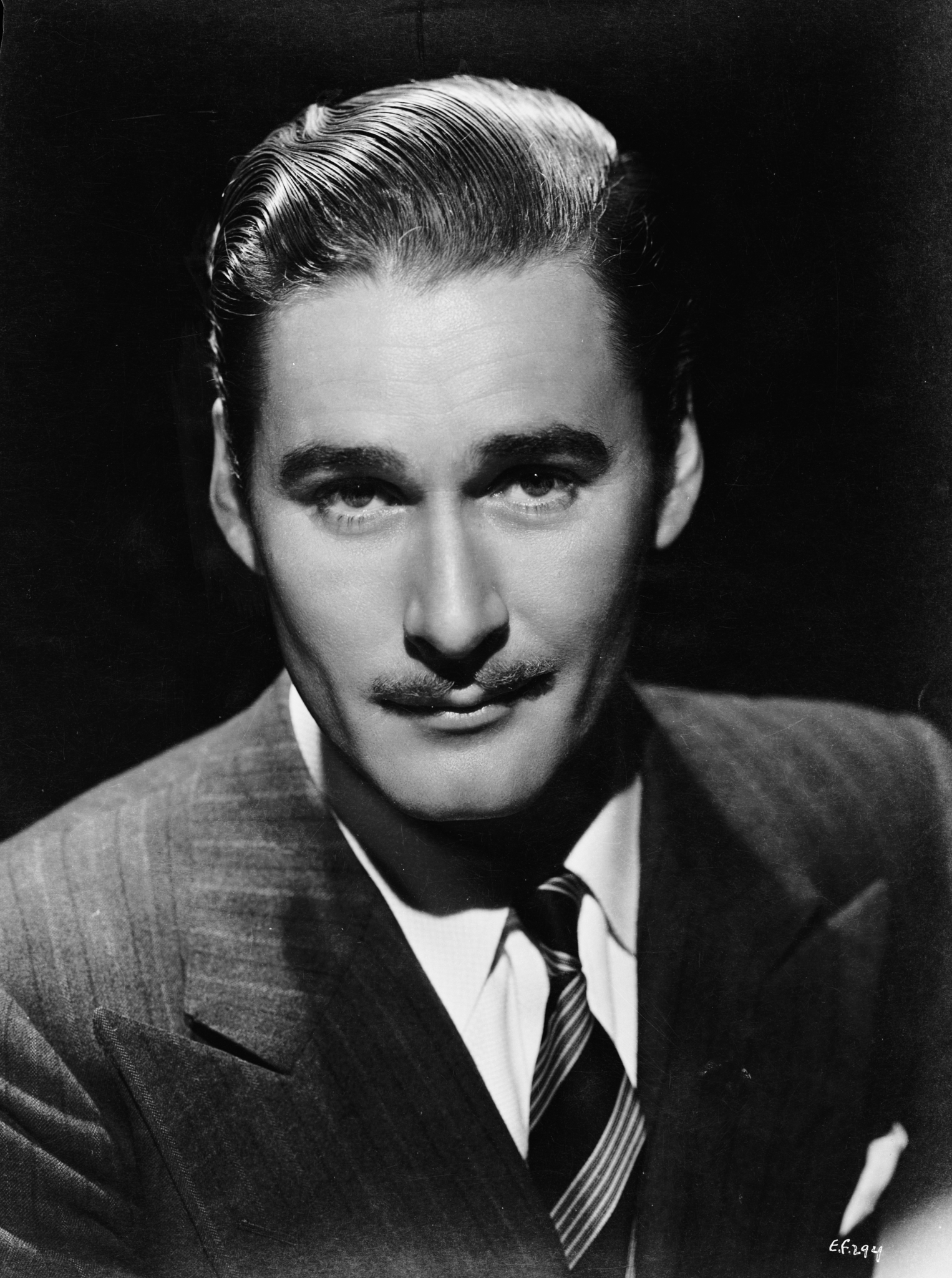
Errol Flynn was known for his striking good looks, which contributed to his status as a Hollywood heartthrob. Standing at 186 cm, he possessed a tall and athletic build, complemented by a chiseled jawline and piercing blue eyes. His on-screen presence was marked by a charismatic smile and a confident demeanor that resonated with audiences.
Flynn's hairstyle evolved throughout his career, from the slicked-back styles of the 1930s to the more relaxed and tousled looks of the 1940s and 1950s. He often sported a classic Hollywood wave that framed his face, enhancing his rugged charm. While Flynn did not have notable tattoos, he was known for his adventurous spirit, which was reflected in his choice of roles and the daring characters he portrayed.
Filmography Overview
Errol Flynn's filmography is characterized by a diverse range of roles, primarily in adventure, action, and historical dramas. He became a defining figure in the swashbuckling genre, and his performances often blended romance with thrilling action sequences. Flynn's ability to embody the quintessential heroic character, combined with his charm and charisma, made him a staple of Hollywood during his peak years.
His work ranged from classic tales of heroism to more complex characters in dramatic narratives. Flynn's films frequently featured themes of adventure, rebellion, and romance, allowing him to showcase his range as an actor. His legacy is evident in the influence he had on subsequent generations of actors, particularly those drawn to similar swashbuckling roles.
Awards and Achievements
Throughout his career, Errol Flynn received various accolades recognizing his contributions to the film industry. While he was not nominated for Academy Awards during his lifetime, he was honored with a star on the Hollywood Walk of Fame in 1960, solidifying his place in cinematic history. His films, many of which were box-office successes, continue to be celebrated for their artistic and entertainment value.
Flynn's legacy is not solely defined by awards but by his lasting impact on the film industry. He is often credited with popularizing the swashbuckling genre and inspiring future actors to take on adventurous roles. His unique blend of charm and talent helped to shape the landscape of Hollywood during the mid-20th century.
Legacy
Errol Flynn's influence on cinema and culture is undeniable. His portrayal of dashing heroes and adventurous characters left an indelible mark on Hollywood, inspiring countless actors and filmmakers. Flynn’s ability to captivate audiences with his charisma and charm paved the way for future generations to explore similar archetypes in their storytelling.
What makes Errol Flynn a lasting and impactful figure in film history is not only his on-screen performances but also his larger-than-life persona that transcended the silver screen. His tumultuous life, filled with ups and downs, resonated with the public, making him a complex character both in his films and in real life. Flynn's legacy continues to endure, celebrated by film enthusiasts and historians alike, as a quintessential symbol of classic Hollywood glamour and adventure.
Net Worth
When diving into the world of Errol Flynn, the iconic swashbuckling actor who ruled Hollywood during the 1930s and 1940s, it's fascinating to see how various external sources estimate his net worth. Celebrity Net Worth lists Flynn's fortune at around $50 million, a figure that reflects not only the star's undeniable talent but also the commercial success of his films. WealthyGorilla and TheRichest echo similar sentiments, placing him within the same ballpark, albeit with slight variations that can be attributed to the methodologies each site employs. For example, PeopleAi suggests a more modest figure, which might leave one scratching their head. The discrepancies stem from how each platform interprets Flynn's earnings, the impact of inflation, and the differing timelines of his career.
While these figures have their merits, they also come with limitations. Many of these websites primarily rely on outdated financial information or estimation models that fail to account for the nuances of Flynn's career. The reality is that calculating an actor's net worth isn’t an exact science, especially for someone whose career spanned decades and included numerous films, television roles, and, let's be real, personal escapades that may not have been financially prudent. As a result, the numbers can feel more like educated guesses, often missing the true essence of an actor's financial journey.
To get a more grounded understanding of Flynn's financial legacy, it's essential to look at his film careers through a dual-layer analysis. In Hollywood, the pay structure for supporting actors during Flynn's heyday often depended on factors such as film budgets, billing positions, and market demand. For example, leading roles in major films could command salaries in the hundreds of thousands, while supporting actors might earn anywhere from a few thousand to tens of thousands per project. In Flynn's case, his status as a leading man allowed him to negotiate better pay, especially in films with large budgets that promised substantial box office returns.
Film budgets play a significant role in determining an actor's salary. For instance, if a studio invests heavily in a project, they usually allocate a more considerable portion of the budget to entice top-tier talent. Flynn often found himself in films with substantial financial backing, which not only elevated his status but also guaranteed him a slice of that pie. Furthermore, the billing position on a film poster could dramatically affect an actor's negotiation power. Flynn, often top-billed, had the leverage to demand higher pay based on his marketability.
Television roles, while not as prevalent in Flynn's career as film, also come into play when considering earnings. In the era Flynn was active, top stars could command up to $10,000 per episode, a figure that would have been significant for someone transitioning from the silver screen to the small screen.
Here’s a breakdown of some of Errol Flynn's major films, their approximate budgets, and my estimated earnings for him in each project:
| Film | Approximate Budget | Estimated Earnings |
|---|---|---|
| Captain Blood (1935) | $1.5 million | $100,000 |
| The Adventures of Robin Hood (1938) | $2 million | $150,000 |
| The Sea Hawk (1940) | $1.8 million | $125,000 |
| They Died with Their Boots On (1941) | $1.7 million | $110,000 |
| Gentleman Jim (1942) | $1.2 million | $90,000 |
| The Adventures of Don Juan (1948) | $1.5 million | $100,000 |
In "Captain Blood," Flynn's breakout role, he was thrust into the limelight and reportedly earned around $100,000—an impressive sum for the time. The film's budget of $1.5 million meant that the studio had high expectations, and Flynn delivered. "The Adventures of Robin Hood," arguably his most iconic role, came with a budget of $2 million, allowing Flynn to negotiate a salary of approximately $150,000. This film was a massive hit and solidified his star status, allowing him to command higher pay in subsequent projects.
"The Sea Hawk" and "They Died with Their Boots On" followed suit, with budgets of $1.8 million and $1.7 million, respectively. Flynn's earnings for these projects hovered around $125,000 and $110,000, respectively. His knack for portraying heroic characters resonated with audiences, ensuring that studios were willing to invest heavily in his talent. In "Gentleman Jim," the budget was a bit lower at $1.2 million, but Flynn still managed to secure around $90,000, demonstrating his consistent marketability.
Finally, "The Adventures of Don Juan" rounded out this analysis with a budget of $1.5 million and Flynn’s earnings landing at about $100,000. While this may seem modest compared to today’s standards, it was a significant sum during an era when film was the primary entertainment medium.
Considering the total estimated earnings across his major films, we can safely speculate that Flynn earned somewhere around $715,000 from this selection alone. This number doesn’t account for other films, potential royalties, endorsements, or television appearances, which could have contributed significantly to his wealth.
Aligning this with the figures found on net-worth websites, we find ourselves amidst a fascinating debate. While external estimates hover around the $50 million mark, my analysis suggests that Flynn's earnings from films alone, when adjusted for inflation and considering the entire breadth of his career, could paint a picture that supports the higher end of the spectrum—though it still raises eyebrows when we think about the lifestyle Flynn led, which was often riddled with financial ups and downs.
In conclusion, the net-worth landscape for Errol Flynn is a complex interplay of external estimations and a deeper dive into his film earnings. While websites suggest a figure that may seem inflated or optimistic, my analysis proposes a more nuanced view that considers both historical context and financial realities. Thus, a realistic net worth for Flynn, considering all his career aspects, might range from $30 million to $50 million, harmonizing with both the external data and our independent estimates. It’s a testament to the enduring allure of an actor who not only entertained but also shaped the very fabric of Hollywood.