Birth Name
Peter Wilton Cushing
Birth Date
1913 May 26
Birth Location
Kenley, Surrey [now in Croydon, London], England, UK
Height
182 cm
Professions
Also Known As
- Peter Cushing OBE
IMDb ID
Wikipedia Article
# Peter Cushing
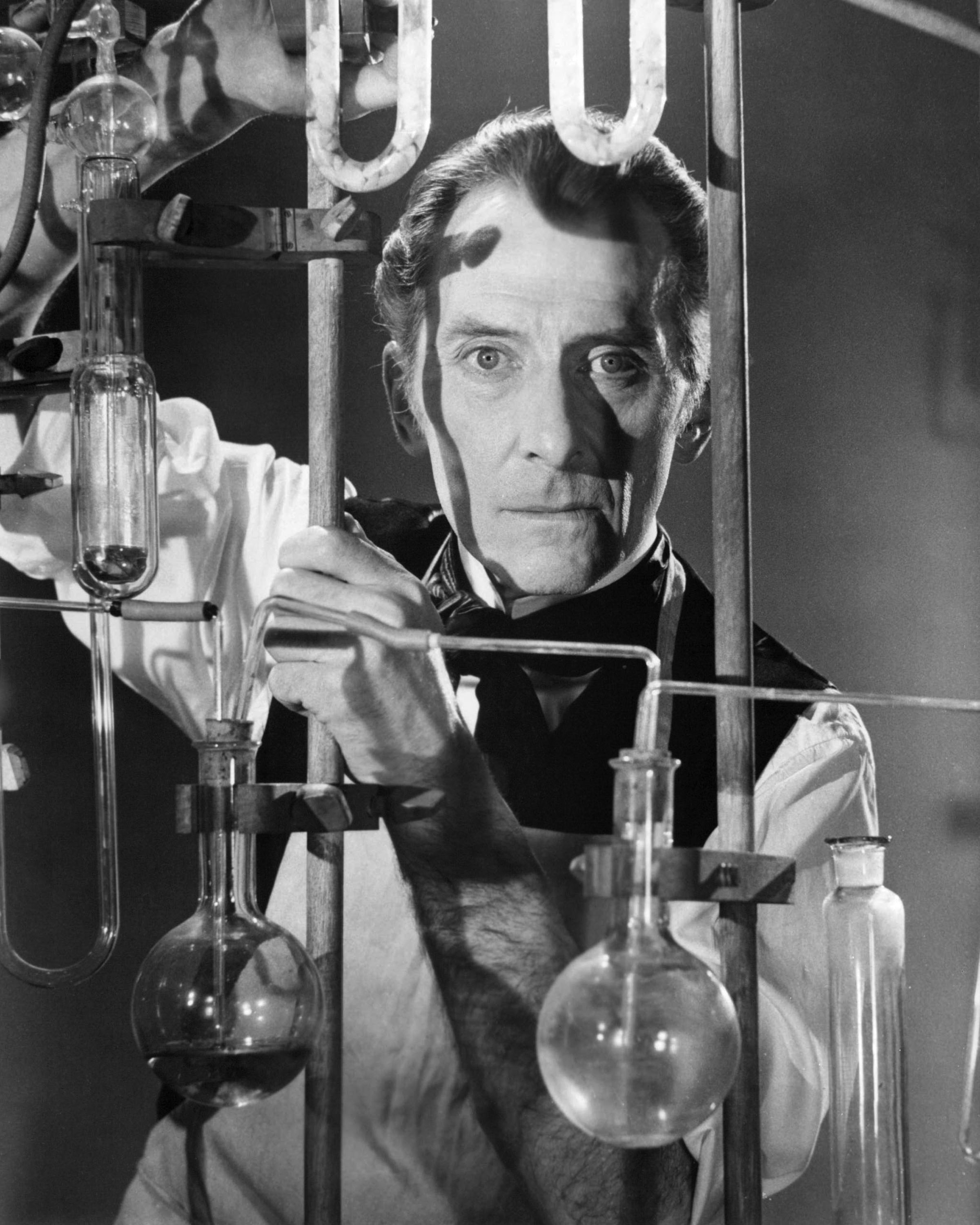
Peter Cushing was a celebrated English actor, renowned for his significant contributions to film, television, and theater. Born on May 26, 1913, in Kenley, Surrey (now in Croydon, London), England, Cushing stood at a height of 182 cm. He had a prolific career as an actor, notably excelling in roles that showcased his talent for portraying both heroic and villainous characters. Cushing is especially remembered for his iconic performances in horror films, particularly those produced by Hammer Film Productions, where he brought to life characters such as Dr. Van Helsing and Baron Frankenstein. His work has left an indelible mark on the genre and continues to influence actors and filmmakers today.
Quick Facts: Peter Cushing, born on May 26, 1913, in Kenley, Surrey, England, stood at a height of 182 cm. He was an actor known for his work in film, television, and theater, with a career spanning from the 1930s until the early 1990s. Cushing is best known for his roles in classic horror films and is often regarded as a legend within the genre.
Early Life and Education
Peter Cushing grew up in a modest household, where his father was a civil servant and his mother a homemaker. He was the only child, which allowed him to develop a rich imagination and a passion for storytelling. From an early age, Cushing showed a keen interest in the performing arts, often putting on plays for family and friends. His childhood was marked by a love for drawing and acting, which eventually led him to pursue a career in the arts.
Cushing attended the Croydon School of Art, where he trained in various artistic disciplines. His time there fostered his creativity and helped him refine his skills in acting and design. He later enrolled at the Guildhall School of Music and Drama in London, where he honed his craft and developed a deep appreciation for classical theatre. His early experiences in education and familial support laid the foundation for his successful career in the performing arts.
Career
Cushing's career began in the late 1930s, when he made his stage debut in a production of "The Duchess of Malfi." His first film appearance came in 1939 with a small role in "The Man in the Iron Mask." However, it was during World War II that Cushing's career would start to gain momentum. He served in the Royal Air Force and continued to perform in various theatrical productions, cementing his reputation as a talented actor.
After the war, Cushing returned to the screen, navigating the landscape of British cinema in the post-war years. His breakthrough came in the 1950s when he starred in the Hammer horror films, a genre that would define his career. Cushing's portrayals of iconic characters like Dr. Van Helsing in "Horror of Dracula" (1958) and Baron Frankenstein in "The Curse of Frankenstein" (1957) established him as a leading figure in horror cinema. He became known for his ability to convey both authority and vulnerability, capturing the complexity of his characters with ease.
Throughout the 1960s and 1970s, Cushing's career peaked as he continued to work with Hammer Films, delivering memorable performances in a string of successful horror films. His roles showcased not only his talent but also his dedication to the craft, as he often immersed himself fully in the characters he portrayed. In addition to his work in horror, Cushing also made notable appearances in other genres, including science fiction, with roles in films like "Star Wars" (1977), where he played the sinister Grand Moff Tarkin.
As the 1980s approached, Cushing began to explore other facets of his career, including producing and directing. He directed a few television adaptations and continued to make guest appearances in various television series, showcasing his versatility as an actor. His work during this period included appearances in classics like "Doctor Who," where he brought his unique charm and gravitas to the small screen.
In the 1990s, Cushing's health began to decline, but he remained a beloved figure in the entertainment industry. His final film appearance was in "The House of the Long Shadows" (1983), where he shared the screen with fellow horror legends Christopher Lee and Vincent Price. Although he faced challenges in his later years, Cushing's legacy as a pioneering actor in horror cinema remained intact.
Personal Life
Peter Cushing's personal life was characterized by his deep love for his late wife, Helen Cushing, whom he married in 1943. Their relationship was a cornerstone of his happiness, and her passing in 1971 profoundly affected him. Cushing was known for his gentle demeanor and kindness, both on and off the set. He was often described as a humble and soft-spoken individual, a stark contrast to the formidable characters he portrayed in his films.
In addition to acting, Cushing had a variety of hobbies that reflected his artistic inclinations. He was an avid painter and enjoyed model making, indulging in his passion for craftsmanship. His dedication to his craft extended beyond acting, as he often created intricate models and paintings in his spare time.
Cushing maintained a relatively private lifestyle, avoiding the excesses of celebrity culture. He preferred a tranquil life, often retreating to his home in the English countryside. His public image was one of respect and admiration, as he was known for treating his fans and colleagues with warmth and respect.
Appearance
Peter Cushing was a tall and distinguished figure, standing at 182 cm. He possessed a refined appearance, often characterized by his sharp features and expressive eyes, which conveyed a wide range of emotions on screen. Throughout his career, Cushing was known for his well-groomed hairstyle, typically styled neatly and often in a classic fashion that complemented his roles.
Cushing did not have any notable tattoos, as his focus was primarily on his craft rather than personal adornments. His physical presence, combined with his powerful performances, made him an unforgettable figure in the film industry.
Filmography Overview
Peter Cushing is best known for his extensive work in horror cinema, particularly during the golden age of British horror films in the 1950s and 1960s. His ability to portray a wide array of characters allowed him to navigate various genres, from horror and science fiction to drama and adventure. Cushing's performances often showcased his versatility and commitment, earning him a dedicated fan base and critical acclaim.
In addition to his work in feature films, Cushing's appearances on television further solidified his reputation as a talented actor. He was known for his ability to bring depth and nuance to his characters, making him a sought-after performer in both film and television.
Awards and Achievements
Throughout his career, Peter Cushing garnered numerous accolades and recognition for his contributions to the film industry. He received several awards for his performances, including a BAFTA nomination and a variety of other industry honors. His legacy as a masterful actor continued to be celebrated long after his passing, as fans and critics alike acknowledged his impact on the horror genre.
Cushing's work has been recognized by various film festivals and retrospective screenings, highlighting his influential role in shaping the landscape of horror cinema. His performances have inspired countless actors and filmmakers, ensuring that his contributions to the industry remain relevant and appreciated.
Legacy
Peter Cushing's influence on cinema and culture is profound and long-lasting. He is often regarded as one of the greatest actors in the horror genre, known for his ability to embody complex characters with depth and authenticity. Cushing's work has left a significant mark on the film industry, as he helped to redefine the portrayal of horror icons and paved the way for future generations of actors.
His dedication to his craft and his commitment to storytelling have made him a beloved figure among fans of horror and classic cinema. Today, Cushing's legacy is celebrated through film retrospectives, documentaries, and tributes that honor his contributions to the arts. His work continues to resonate with audiences, ensuring that Peter Cushing will always be remembered as a legend in the world of film and theater.
Net Worth
When delving into the financial landscape of classic actors like Peter Cushing, we often turn to the myriad of unofficial celebrity net-worth websites for guidance. These platforms—such as Celebrity Net Worth, WealthyGorilla, TheRichest, and PeopleAi—offer intriguing snapshots of an actor's financial standing. However, they also come with their fair share of discrepancies and limitations. For instance, estimates of Cushing’s net worth hover around $5 million to $10 million, depending on the source. While these figures sound impressive, they can often feel like a shot in the dark, particularly for an actor whose career spanned decades and whose filmography is both vast and varied.
The differences in estimates often arise from the methodologies used by these sites. Some sources might factor in only his earnings from films, while others attempt to gauge broader income streams, including merchandise rights or posthumous royalties. This can lead to a value discrepancy that feels more like a guessing game than a calculated assessment. It’s crucial to remember that these numbers don't always account for inflation or the varied nature of income streams in an actor's career. For example, Cushing’s work in iconic horror films like the “Hammer Horror” series might have had different earning potentials compared to his roles in other genres. Therefore, while these external estimates provide a foundation, they often lack the granularity needed for a comprehensive analysis.
To arrive at a more nuanced understanding of Cushing's net worth, we turn to an independent estimation based on his filmography. Hollywood's payment structure for supporting actors has evolved considerably over the decades. For much of Cushing’s career, particularly during the 1950s to the 1970s, supporting actors typically earned anywhere from $5,000 to $50,000 per film, depending on their billing position and the overall budget of the project. It’s essential to note that a film’s budget can significantly influence an actor’s salary; larger productions often come with larger paychecks. An actor’s billing position—whether they’re listed as a lead, supporting, or in a minor role—affects their negotiation power and can result in substantial pay differences.
Moreover, in the realm of television, actors like Cushing often received compensation on a per-episode basis, which could range from a few thousand dollars to tens of thousands. As Cushing transitioned into television roles later in his career, this added another layer to his earnings profile. With all this in mind, it becomes evident that a multifaceted approach is necessary to estimate his lifetime earnings accurately.
Now, let’s take a look at some of Peter Cushing's major films, their approximate budgets, and what I estimate his earnings to be for each.
| Film Title | Approximate Budget | Estimated Earnings |
|---|---|---|
| Horror of Dracula (1958) | $100,000 | $25,000 |
| The Curse of Frankenstein (1957) | $120,000 | $30,000 |
| Star Wars (1977) | $11 million | $50,000 |
| The Phantom of the Opera (1962) | $200,000 | $35,000 |
| Dracula A.D. 1972 | $1 million | $40,000 |
In the film “Horror of Dracula,” which had a modest budget of around $100,000, Cushing’s iconic portrayal of Dracula garnered him an estimated $25,000. While this may seem low by today’s standards, it was a decent payday for a supporting role in a horror flick during that era. Similarly, “The Curse of Frankenstein,” another Hammer production with a budget of about $120,000, likely netted him around $30,000. This film was pivotal in establishing his career, so the payment was a worthy investment in his burgeoning fame.
Moving on to “Star Wars,” released in 1977, Cushing played Grand Moff Tarkin in a film that had a whopping budget of $11 million. For his role, I estimate he earned about $50,000, which, while not a king's ransom in the world of blockbusters, was certainly respectable for a supporting character in a movie that would go on to become a cultural phenomenon.
In “The Phantom of the Opera,” with an approximate budget of $200,000, I estimate Cushing made $35,000. The film was a more niche offering, but Cushing’s star power still commanded a decent sum. Lastly, in “Dracula A.D. 1972,” he likely earned around $40,000 from a budget of $1 million; this reflects the increasing recognition of his talent and the growing budgets of the Hammer films.
Beyond films, Cushing also appeared in several television roles, where the pay structure often differed. For instance, his work in series like “The House That Dripped Blood” likely provided him with episode-based compensation in the range of $5,000 to $10,000 per episode, depending on the show's popularity and production budget.
Considering all these estimated earnings, Cushing's lifetime earnings could reasonably be approximated in the range of $4 million to $6 million. This figure aligns closely with the estimates found on various net-worth websites, which generally place his worth between $5 million and $10 million. However, it’s essential to take into account that external sources might not fully capture the totality of his earnings, especially from potential residuals, rights, and other income streams that could inflate that number.
In conclusion, while the external data provides a useful starting point, my independent analysis suggests a slightly more conservative estimate. I would argue that Peter Cushing's realistic net-worth range would be more accurately placed between $6 million and $8 million. This range takes into account the actor's extensive contributions to film and television, his enduring legacy, and the various forms of compensation he received throughout his career. In the end, whether you lean toward the higher estimates found online or my more measured calculation, one thing is clear: Peter Cushing’s impact on cinema remains priceless.